
Flashing Failure at Parapet Walls: The Detail That Quietly Starts Big Problems

I was driving through a suburb of Denver last spring, killing time between inspections, and I pulled into a strip mall parking lot to grab coffee. While I was waiting for my order, I found myself staring at the building across the lot. Nice looking place. Brick facade, tidy storefronts, recently painted.
But the parapet wall caught my eye. The coping cap — that metal cover on top of the wall — had a slight gap where two sections met. Maybe a quarter inch. Nothing dramatic. Most people wouldn't even notice it.
I walked over after I got my coffee. Just to look. The gap was bigger than I thought. Behind it, I could see the edge of the old flashing, peeling away from the wall like a loose bandage. The sealant had cracked and pulled back years ago.
Inside that building, I guarantee you, there was a water stain somewhere. Maybe on the wall, maybe on a ceiling tile. Maybe the owner had patched it twice and still couldn't figure out why it kept coming back.
This is how parapet failures start. Not with a bang. With a gap. A crack. A piece of metal that shifted a quarter inch over ten years of thermal expansion.
Why Parapet Walls Are Different
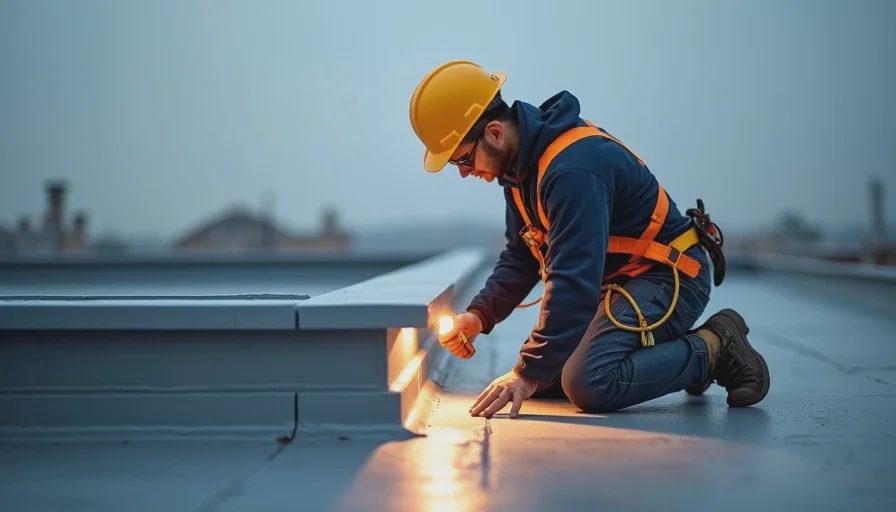
A parapet wall is the part of the building wall that extends above the roofline. It's the "lip" around the edge of a flat roof. In commercial buildings, it's everywhere — strip malls, warehouses, office buildings, schools. You see them constantly without ever thinking about them.
But here's what makes parapets uniquely vulnerable.
First, they're exposed on three sides. Heat, cold, UV, wind, rain, snow — the parapet takes all of it. It's the most abused part of your roof assembly.
Second, they're transitional. They sit at the intersection of wall and roof. Two different assemblies, two different materials, two different ways of moving. The wall expands and contracts vertically. The roof expands and contracts horizontally. And right at the corner where they meet, something has to absorb that movement.
Third, they collect water. Water runs down the wall face and hits the roof. If the flashing isn't perfect, that water finds its way in.
And fourth, they're hard to inspect. Most facility managers walk their roofs and look at the field membrane, maybe check a few penetrations. They don't get right up to the parapet and inspect every inch of flashing. It's awkward. It takes time. It's uncomfortable being that close to the edge.
So parapet failures are the most common flashing failure I see. And they're almost always discovered late.
What Actually Happens
A building "breathes." Not like lungs, but thermal movement. The sun hits one side of the building, that side expands. The sun goes down, it contracts. Over a year, a 100-foot-long parapet wall can move an inch or more.
The coping cap — that metal piece on top — is supposed to shed water. The flashing underneath is supposed to direct any water that gets past the cap down onto the roof surface and into drains.
But over time, things happen. The flashing's sealant dries out. The cap's seams open up. The fasteners loosen from vibration. The metal corrodes from salt or pollution. The wall settles a little, or the roof deck shifts a little. And now you have a gap.
Here's what nobody tells you: an opening as small as 1/16 inch can let water into your wall. Once water gets behind the parapet, it runs down the inside of the wall, hits the roof edge, and finds its way into the building. Not always right away. Sometimes it travels sideways for 20 feet before it finds a path down. That's why a leak near the center of a roof often comes from a parapet failure that started at the edge.
The Six Most Common Parapet Failures
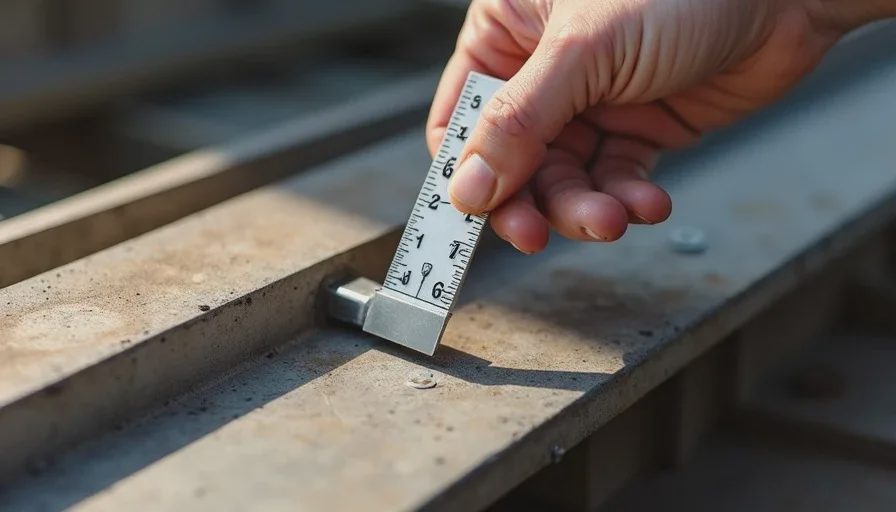
I've got a checklist in my head when I inspect a parapet. These are the things I see most often.
Coping cap separation. The metal pieces on top start pulling apart at their seams. The expansion joints that were supposed to handle movement get compressed, or they fail entirely. Then water gets through the gap and down into the flashing.
Dried-out sealant. Whatever sealant was used between the coping cap and the flashing has hardened and cracked. Good sealant is flexible for about 5-7 years. After that, it's a ticking clock.
Missing or corroded edge metal. The "drip edge" at the bottom of the parapet that should direct water onto the roof surface is rusted, bent, or simply gone. Water runs down the wall face and straight into the roof assembly.
Termination bar failures. The metal bar that holds the roof membrane up against the parapet wall comes loose, or the membrane pulls away from it. This is especially common on older TPO and EPDM roofs where the membrane has shrunk.
Punctured counter-flashing. Some well-meaning maintenance guy drove a screw through the counter-flashing to hold something up, or a roofer used a nail gun incorrectly. Now there's a hole that water follows.
Inadequate height. The code requires the flashing to extend up the parapet wall at least 8 inches. I routinely see installations where it's only 4-5 inches. A heavy rain with wind blows water up and over the flashing. That's an instant leak.
How to Spot Parapet Trouble From Ground Level
You don't have to climb a ladder to start your inspection. In fact, I usually begin from the parking lot.
Look at the top of the parapet wall. Do the coping cap sections meet cleanly? Are there gaps? Does the cap look straight or is it sagging in places? Does the sealant between sections look intact, or is it cracked and missing?
Look at the wall face. Are there any dark stains running down the brick or stucco? That's water running off the roof and down the wall. Not a good sign.
Look at the edge where the wall meets the roof. Can you see the flashing pulling away? A gap of half an inch is visible from 20 feet if you know what you're looking for.
If any of these catch your eye, you've got a parapet issue that needs investigation.
How to Inspect a Parapet Up Close
When you get onto the roof, here's what I recommend.
Start at the wall. Stand about three feet back and visually trace the entire length of each parapet. Look for anything that doesn't look flat, straight, or tight. Take photos of every suspect section.
Then walk right up to the wall. Press on the coping cap. Is it loose? Any movement means the fasteners have failed. Look under the cap, if you can. Some coping caps are removable — not all, but some. If you can lift it, look at the flashing underneath.
Check the termination bar. Is it tight against the wall? Is the membrane still under it or has it pulled away? Check for any rust, which means moisture has been present.
Check the sealant. Poke it with a screwdriver. If it's hard and crumbly, it needs replacement. Good sealant should be slightly rubbery.
And finally, check the wall itself. Any cracks? Any spalling brick or concrete? Any dark stains that suggest water has been running down the inside of the wall and has now found its way out?
The Real Cost of Ignoring Parapet Flashing

Let me tell you about a school district I worked with in New Jersey. Their maintenance director was a sharp guy but he'd inherited a whole set of buildings, each with decades of deferred maintenance. He'd been there three years and had made progress, but he hadn't tackled the parapet issues yet.
Then the science wing in the middle school started having leaks. Stains on the walls in the hallway. Musty smell. He brought me in.
We found that the parapet coping on that wing had separated at almost every seam. The flashing underneath was 20 years old, brittle, and had pulled away from the wall. Water had been running down the inside of the block wall for years, corroding the steel reinforcement inside the masonry. We cut open one section and found the rebar was completely rusted. The wall was losing structural strength.
The repair cost: $240,000. Not just roof work — masonry repair, rebar replacement, new flashing, new coping, interior drywall repairs, mold remediation. Three classrooms were closed for two months.
The thing is, the signs had been visible from the ground for at least five years. Any maintenance director who'd looked at those gaps would have seen them. But nobody had looked. Or if they had, they'd assumed it was cosmetic.
A small repair five years earlier would have cost $18,000. Instead, they paid $240,000. And they got a huge disruption to the school schedule.
A Real Parapet Inspection Checklist
Here's what I use when I'm walking a parapet. You can use it too.
Coping Cap:
Any gaps at seams? Gap wider than 1/8 inch is problem.
Any movement? Cap should be solidly secured.
Any rust or corrosion? Especially at seams and corners.
Any signs of sealant failure? Check the cap-to-wall interface.
Flashing:
Is it fully attached to the wall? Any peeling or separation?
Any rust or corrosion?
Is the height at least 8 inches up the wall?
Any holes, tears, or puncture damage?
Are the laps overlapped correctly? Check the direction of overlap.
Termination Bar:
Is it tight against the wall?
Any missing screws or fasteners?
Any rust or corrosion?
Is the membrane fully under the bar or has it shrunk away?
Masonry/Wall:
Any cracks?
Any spalling or loose brick/concrete?
Any dark stains suggesting water infiltration?
Any efflorescence — white powdery mineral deposits? That's a moisture migration indicator.
Sealant:
Is it intact and flexible, or hard and cracked?
Any areas where it's separated from the wall or metal?
Does it show signs of movement — pulled away on one side?
Take photos of everything. Mark problem areas on a roof plan. Get the fix scoped and scheduled. Don't wait.
Frequently Asked Questions
1. How often should parapet flashing be inspected?
At least twice a year — spring and fall. But I recommend checking coping caps visually from ground level after any major storm or high-wind event.
2. What is a parapet wall?
It's the section of a building's exterior wall that extends above the roofline. It acts as a barrier at the roof edge and often houses roof drains or conceals mechanical equipment.
3. Why do parapets leak so often?
Parapets are exposed to weather on three sides, have multiple material transitions, and are subject to thermal movement and wind uplift. They're the most vulnerable part of a commercial roof assembly.
4. How long does parapet flashing last?
Typically 10-15 years for standard metal flashing in moderate climates, 8-12 years in coastal or severe weather zones. The sealant should be replaced every 5-7 years.
5. Can I repair parapet flashing myself?
No. Parapet work is specialized and requires safety equipment. Improper repairs can make leaks worse or create new ones. Hire a commercial roofing contractor experienced in parapet and wall flashing.
6. How much does parapet flashing replacement cost?
For a typical repair, $1,500-$4,000 per 100 linear feet. For full replacement (coping, flashing, terminations), plan on $8,000-$15,000 per 100 linear feet. The cost is variable and depends on access, materials, and wall condition.
7. What's the difference between base flashing and counter-flashing?
Base flashing is the watertight material that turns up at the wall. Counter-flashing is a metal layer installed over base flashing to lock it in place. Counter-flashing acts like a shield, and when properly detailed, it can expand and contract with the wall.
Owner Letters
0 lettersNo letters yet — be the first to write one.