
11 Questions to Ask Before You Approve a Roofing Quote

You have three quotes on your desk. They all look professional. They all have logos, warranty certificates, and nice formatting. But they don't all say the same thing – and the cheapest one might actually be the most expensive in the long run.
The difference between a good roofing decision and a costly mistake often comes down to what you ask before you sign.
Contractors are not mind-readers. If you don't ask, they won't volunteer. And in many cases, the details they leave out are the ones that will cost you later – either in change orders, premature failures, or voided warranties.
Here are 11 questions every building owner should ask – and the answers you should expect – before approving any commercial roof quote.
Question 1: "Is this a full tear-off or a recover – and why?"
Why you need to ask: Many contractors quote a recover (installing new membrane over the existing roof) because it's cheaper and faster – and they assume you'll choose the lower price. But if your roof has wet insulation or a failing deck, a recover just hides the problem.
The answer you want: A clear, evidence-based recommendation. "We recommend full tear-off because our moisture scan shows 25% wet insulation" – not "we always do full tear-off" (that's overscoping) or "we always do recover" (that's cutting corners).
What to do: If they recommend recover without a moisture survey, ask them to perform one – or hire an independent inspector – before you approve.
Question 2: "How do you handle deck repairs – and what's the allowance?"
Why you need to ask: After tearing off the old roof, your contractor may find rotten wood, rusted metal, or spalled concrete. These repairs are often excluded from the base quote and become "change orders" – at whatever price the contractor decides.
The answer you want: A specific allowance (e.g., "Up to 5% of the deck area will be repaired at no extra cost. Additional repairs billed at $X per sq ft, with owner's prior written approval.") And a per-unit price for common repairs (e.g., $150 per board of plywood replacement, $200 per metal patch).
What to do: Never accept a quote that says "deck repairs extra" with no price list. That's a blank check.
Question 3: "What insulation are you using – type, thickness, R-value, and cover board?"
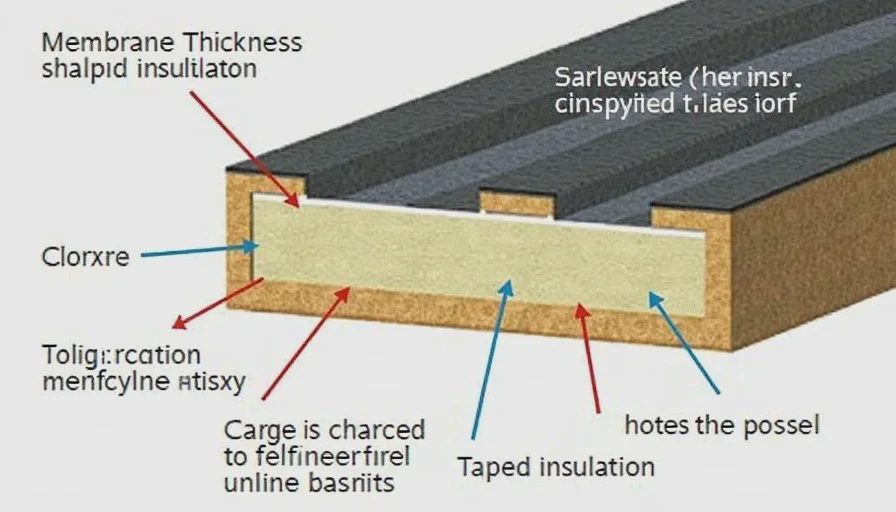
Why you need to ask: Insulation is a huge cost driver – and a huge performance driver. Many contractors quote the cheapest, thinnest insulation to win the bid. Without a cover board, your membrane will be more vulnerable to foot traffic and punctures.
The answer you want: Manufacturer, product name, thickness in inches, R-value per inch (and total R-value), and cover board type (e.g., ½-inch gypsum) – all clearly stated.
What to do: Check your local energy code for minimum R-value requirements. If the quote doesn't meet them, it's not legal – and you'll fail inspection.
Question 4: "What membrane thickness are you installing – and why that thickness?"
Why you need to ask: 45‑mil, 60‑mil, and 80‑mil are the common options for TPO and PVC. Thicker membranes are more puncture-resistant and have longer warranties – but cost more. Contractors may quote 45‑mil to keep the price low, even if it's inadequate for your rooftop traffic.
The answer you want: A specific thickness (e.g., "60‑mil TPO") with a justification (e.g., "You have 8 HVAC units that require regular maintenance access, so 60‑mil provides better protection than 45‑mil").
What to do: If you have rooftop equipment that requires frequent service, opt for 60‑mil or 80‑mil. The cost premium is small relative to the risk of a puncture leak.
Question 5: "What are your seam attachment details – and will you perform seam adhesion testing?"
Why you need to ask: Seams are the weakest point on any single‑ply roof. Heat‑welded seams on TPO/PVC can fail if the welding temperature is wrong or if the surface is contaminated. Adhesive seams on EPDM can fail over time.
The answer you want: "We heat‑weld all seams at X temperature with a consistent overlap of 2 inches. We will conduct peel‑test adhesion testing on at least 3 seams per 10,000 sq ft and provide documented results."
What to do: If they say "we don't test seams, we just do it right" – that's a red flag. Testing is standard quality control, not optional.
Question 6: "What is your drainage plan – and how will you ensure positive slope to each drain?"
Why you need to ask: Without positive slope, water ponds. Ponding water shortens roof life and voids warranties. Many quotes omit slope corrections entirely.
The answer you want: A clear statement on how they'll achieve drainage – either by using tapered insulation over flat areas, by re‑shaping the deck, or by installing additional drains. They should specify the minimum slope (¼ inch per foot is typical).
What to do: Ask them to mark drain locations on a roof plan and show how water will flow. If they can't, they haven't planned for drainage.
Question 7: "What's included in your edge metal and flashing – material, gauge, and coating?"
Why you need to ask: Edge metal and flashings are often where the "extras" pile up. A cheap quote may use thin, uncoated aluminum that corrodes in 5 years, or omit parapet coping entirely, leaving your walls vulnerable.
The answer you want: Specific material (e.g., "0.040‑inch aluminum, baked enamel finish"), gauge, coating type, and a detailed list of every flashing location (perimeter, penetrations, curbs, walls).
What to do: Check if the edge metal matches the building's aesthetic and local wind‑load requirements. If you're in a coastal area, specify stainless steel or heavy‑gauge aluminum.
Question 8: "What warranties are you offering – both manufacturer and labor – and what voids them?"
Why you need to ask: A 20‑year material warranty sounds great – until you read the fine print and discover that any ponding water, any rooftop modification, or any missed annual inspection voids it. Many owners lose their warranty without knowing.
The answer you want: Both a manufacturer's material warranty (with NDL – No Dollar Limit – if possible) and a contractor's labor warranty (minimum 2 years, preferably 5). They should also give you a written list of conditions that will void the warranty – so you know what to avoid.
What to do: If the warranty requires annual inspections by a certified professional, ask for a recommended schedule and cost – and include that in your maintenance budget.
Question 9: "What happens if we have weather delays – and how do you handle rain during installation?"
Why you need to ask: Commercial roofs take time. If rain hits before the membrane is sealed, you could have water inside your building – and you need to know who takes responsibility.
The answer you want: A clear weather contingency plan – e.g., "If rain is forecast, we will install temporary tarps or cover the exposed area with a waterproof membrane. We will not work in active rain. The contract includes 3 extra weather days at no charge; beyond that, we will discuss schedule adjustments."
What to do: If the contract doesn't mention weather, you're at risk. Ask for a specific plan and a point of contact for weather‑related decisions.
Question 10: "What is your change‑order process – and do you require my written approval before doing extra work?"
Why you need to ask: Many contractors start work, discover an issue, and "just fix it" – then send you a bill. If you didn't approve it in writing, you have no leverage to dispute the cost.
The answer you want: "We will not proceed with any change order without your written authorization. We will provide a written estimate for the extra work and get your sign‑off before starting."
What to do: Insist that this language is explicitly in the contract. Verbal approvals are too risky.
Question 11: "Can you provide at least three references from commercial projects completed in the last 24 months – with contact information?"
Why you need to ask: Anyone can show you a portfolio. A reference call tells you if the contractor actually delivered on time, on budget, and with no hidden issues.
The answer you want: Names, building types, project sizes, and phone numbers. When you call, ask: "Were there any change orders? Was the project on schedule? Did they clean up properly? Would you hire them again?"
What to do: If they hesitate or offer only "satisfied customers" without contact details, that's a red flag. Reputable contractors are proud to share references.
Bonus Question: "What's your maintenance recommendation – and how much will it cost annually?"
Why you need to ask: Your new roof needs care – at least annual inspections and drain cleaning. Many owners don't budget for this, and their warranty expires as a result.
The answer you want: A written maintenance plan with recommended frequency (e.g., spring and fall inspections, quarterly drain cleaning) and estimated annual cost (usually $500–$2,000 depending on roof size).
What to do: Factor that cost into your total ownership budget. A well‑maintained roof outlasts an ignored one by 5–10 years.
How to Use These Questions – A Template for Your Next Contractor Meeting
When you receive a quote, schedule a call or meeting. Bring these 11 questions printed out – and take notes on the answers.
Question | Their Answer | Score (1–5) |
|---|---|---|
1. Tear‑off or recover? Justification? | ||
2. Deck repair allowance + per‑unit price? | ||
3. Insulation: type, thickness, R‑value, cover board? | ||
4. Membrane thickness? Justification? | ||
5. Seam testing – yes/no? Documented? | ||
6. Drainage / slope plan? | ||
7. Edge metal and flashing details? | ||
8. Warranties (material + labor) – conditions? | ||
9. Weather contingency plan? | ||
10. Change‑order approval process? | ||
11. Three recent commercial references? | ||
BONUS: Maintenance plan + cost? |
Scoring guide:
45–55 points (or all answers strong): This is a transparent, high‑quality contractor – proceed with confidence.
30–44 points: Some answers are weak – ask for clarification and consider getting more quotes.
Under 30 points: This contractor is not being upfront. Do not sign. Find someone who will answer thoroughly.
Why Asking These Questions Protects Your Investment
A commercial roof replacement is a $50,000–$200,000+ investment. The questions above cost you nothing – but they can save you thousands in change orders, premature repairs, and voided warranties.
Contractors who give clear, specific answers are proud of their work and their process. Contractors who dodge, deflect, or say "don't worry about that" are hiding something – whether it's a lack of knowledge, a cut‑rate material, or a risky approach.
Remember: The best time to ask these questions is before you sign the contract. After you sign, your leverage is gone.
Keep Reading

Upholstery Cleaner: A Practical Guide for Commercial Facilities
Upholstery cleaner guidance for commercial facilities: compare formulas, protect...

Where to Buy Furniture: A Practical Guide for Commercial Property Buyers
Where to buy furniture for a commercial office, waiting room, or break area: com...

Palm Tree Types: A Practical Guide for Property Owners
Palm tree types explained for property owners: learn how species, roots, fronds,...
Owner Letters
0 lettersNo letters yet — be the first to write one.