
beautyrest ultra plush cuddler pet bed: A Practical Buyer’s Review

The beautyrest ultra plush cuddler pet bed is designed for dogs and cats that prefer a soft, enclosed-feeling place to rest. I look at pet beds the same way I look at any frequently used household product: the sales language matters less than the materials, the shape, the cleaning routine, and what happens after weeks of daily use. A bed can look inviting in a product photo and still flatten quickly, trap heat, or become difficult to clean.
For pet owners, the useful question is not simply whether a bed feels plush on day one. It is whether the cushion supports your pet’s normal sleeping position, whether the raised edges retain their shape, and whether the cover can handle fur, drool, muddy paws, and occasional accidents. Those details determine whether the purchase becomes a reliable sleeping station or another item pushed into a closet.
What the cuddler design is meant to do
A cuddler bed typically combines a padded center with raised, rounded sides. That shape gives a dog or cat something to lean against while sleeping. Pets that curl into a ball, tuck their noses under a rim, or shift positions during the night often prefer this style over a flat mat. The surrounding bolster can also create a more sheltered feeling in an open room.
The beautyrest ultra plush cuddler pet bed is most suitable for small and medium pets whose bodies fit comfortably inside the sleeping area without forcing the sides outward. Measure the pet from nose to the base of the tail while standing, then add several inches for curling and repositioning. Do not rely on the overall outside dimensions alone. A thick rim can reduce the usable interior space by a noticeable amount.
The surface should feel inviting without becoming unstable. Very loose stuffing can allow a pet’s shoulders or hips to sink too far, especially if the animal is older or has limited mobility. A supportive center is more important than an exaggeratedly fluffy appearance. In practical terms, watch how your pet gets up after resting. Hesitation, sliding, or repeated repositioning can indicate that the bed is too soft or too small.
Comfort, support, and temperature
The main attraction of a plush cuddler is immediate comfort. Soft fabric can appeal to pets that avoid slick upholstery or firm foam mats. It also provides warmth on hardwood, tile, and other cool floors. That is useful during winter, but owners should consider the room’s temperature and the pet’s coat before placing the bed near a heater or in direct sun.
For a young, healthy pet, a deep cushion may be perfectly adequate. Older dogs, pets with arthritis, and animals recovering from an injury often need a more stable base. A thick-looking bed is not automatically orthopedic. If joint support is a priority, compare the center’s firmness and compression rather than judging the height of the bolsters. Some owners place a low-profile supportive mat beneath a cuddler, but the combined height should not create a tripping problem.
The best location is quiet but not isolated. Many pets sleep better when they can see household activity without being in a busy walkway. Keep the bed away from door swings, stair edges, and drafts. A corner can help the raised sides stay supported, although leaving one open side may make entry easier for a small, elderly, or short-legged pet.
Cleaning and everyday durability
A pet bed is a maintenance item, not a decorative accessory. Before buying the beautyrest ultra plush cuddler pet bed, identify which components can be removed and washed. A zippered cover is helpful because it allows owners to remove hair and dirt without washing the entire cushion. Follow the care label, use a pet-safe detergent, and dry the cover completely before putting it back on the fill.
If the interior cannot be washed, use a washable blanket or liner as a barrier. Shake the bed outdoors several times a week, vacuum loose hair from seams, and inspect the underside for moisture. Damp fill can develop an unpleasant odor even when the outer fabric looks clean. For a puppy, senior dog, or cat prone to accidents, a waterproof layer beneath the bed can protect flooring and make cleanup faster.
Durability depends on the pet as much as the construction. A calm sleeper may use a plush bed for years, while a digger can pull at seams within days. Trim claws, discourage chewing, and remove the bed if exposed stuffing becomes accessible. A torn seam is not just unattractive; loose fibers and filling can become a choking or swallowing hazard.
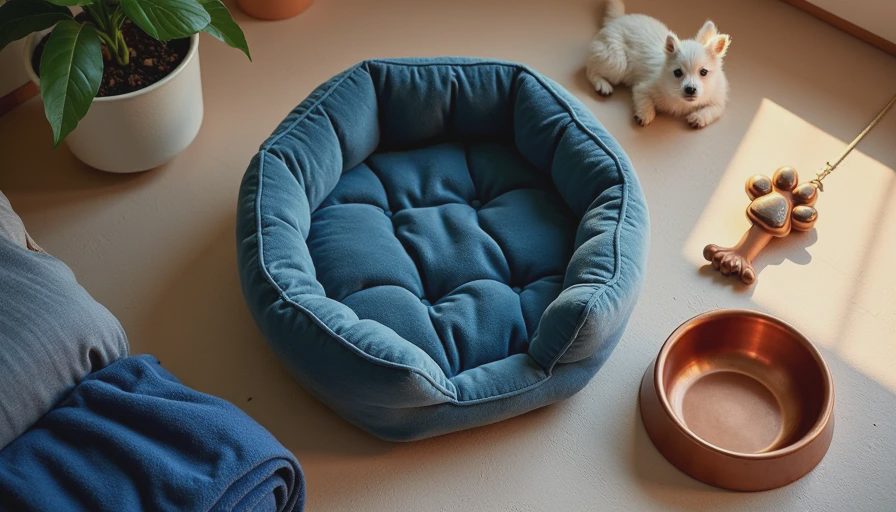
Choosing the right size for your pet
Size selection deserves more attention than color. Measure the pet when relaxed and compare that measurement with the interior sleeping surface. A compact cuddler can feel secure for a Chihuahua, Yorkie, kitten, or similar small companion, but a larger dog may need enough room to stretch fully. If the pet frequently sleeps on its side, use the longest natural sleeping position rather than the curled-up position.
The beautyrest ultra plush cuddler pet bed should allow the animal to enter, turn around, lie down, and rise without climbing over a tall wall. For puppies and older pets, a lower entry point is often more useful than an oversized bolster. If two pets share a bed, size for the larger animal and expect more wear on the center cushion and seams.
Measure the intended floor space too. A bed that barely fits between furniture can become difficult to clean and may block a walkway. Place it on a level surface so the cushion does not slide or tip when the pet jumps in. A non-slip pad can improve stability on hardwood or laminate, particularly for lightweight beds.
Comparing alternatives before you buy
A flat crate mat is usually easier to wash and often costs less, but it does not offer the enclosed feeling of a cuddler. A memory foam mattress can provide better weight distribution for some older pets, although it is usually heavier and less convenient to move. A covered cave bed gives more privacy but can be too warm for a thick-coated dog or a pet that prefers visibility.
The beautyrest ultra plush cuddler pet bed makes the most sense when softness, raised support, and a nest-like shape are the main priorities. It is less compelling if your pet destroys fabric, overheats easily, or needs firm orthopedic support. In those cases, a tightly woven mat, cooling bed, or structured foam mattress may be the more durable purchase even if it looks less luxurious.
Price should be judged against use, not appearance. A $40 bed that lasts two years can be a better value than a $25 bed replaced every few months. Read the return policy, confirm the dimensions, and save the care instructions. Those simple steps prevent many disappointing purchases.
A practical first-week test
When the bed arrives, inspect stitching, zippers, seams, and the underside before allowing unsupervised use. Let the bed air out in a well-ventilated room if it has a strong packaging odor. Place it near a familiar blanket, but do not force the pet into it. Some animals need several days to investigate a new texture.
During the first week, note whether your pet enters willingly, stays centered, and settles without constant scratching. Check the cushion after each night for permanent flattening or uneven filling. Also watch for overheating, especially if the bed is thick and the room is warm. These observations tell you more than a staged product photograph.
For many small pets and moderate sleepers, the beautyrest ultra plush cuddler pet bed can be a comfortable everyday retreat when the size and cleaning setup are right. The roof doesn’t care about the sales pitch, and neither should a pet owner. Measure first, inspect the construction, plan for washing, and choose support that matches the animal rather than buying softness alone.
Keep Reading

Upholstery Cleaner: A Practical Guide for Commercial Facilities
Upholstery cleaner guidance for commercial facilities: compare formulas, protect...

Where to Buy Furniture: A Practical Guide for Commercial Property Buyers
Where to buy furniture for a commercial office, waiting room, or break area: com...

Palm Tree Types: A Practical Guide for Property Owners
Palm tree types explained for property owners: learn how species, roots, fronds,...
Owner Letters
0 lettersNo letters yet — be the first to write one.