
How Facility Managers Can Build a Roof Maintenance Calendar That Prevents Panic

Let me tell you about Dave. He runs a 150,000-square-foot distribution center in Ohio. When I met him, he'd just hung up with an emergency roofer. A spring storm had ripped a seam open over a rack of inventory. Water everywhere. The roofer was quoting $8,000 for a temporary patch.
"This is the third emergency this year," Dave said. "I'm always reacting. Never getting ahead."
I asked him when he last walked his roof. He thought about it. "Maybe last fall?"
When did he last clean the drains? Another pause. "Before winter, I think."
Dave isn't a bad facility manager. He's a busy one. He's juggling HVAC, cleaning, parking lots, tenant complaints, security, budget meetings. The roof only gets attention when it screams. And by the time a roof screams, the bill is already high.
This is the pattern I see everywhere. And it's completely avoidable.
The Real Cost of Not Having a Plan
Here's what happens when you don't have a maintenance calendar. I've watched this play out at least fifty times.
Spring: Heavy rain hits. One of your drains is clogged with leaves from last fall. Water ponds. You don't notice because you're not walking the roof regularly.
Summer: That ponding area gets cooked by UV. The membrane starts breaking down, but you can't see it because there's still water sitting there. Algae grows. The insulation underneath starts absorbing moisture.
Fall: More leaves. Same drain. The water's been sitting for months now. Your energy bills are creeping up but you attribute it to "summer heat."
Winter: Freeze-thaw cycles. The trapped water expands and contracts. A crack forms. Water seeps into the insulation.
Next Spring: First heavy rain. Water finds that crack, travels through the insulation, through the ceiling, onto your inventory. Now it's an emergency. Emergency rates are double. You're paying for tarping, cleanup, expedited materials. Total bill? $12,000.
If you'd cleaned that drain in October, it would have been free. Thirty minutes. Zero dollars. No emergency.
That's the math. And it's not complicated.
What Actually Works (Not a Perfect System, Just a Practical One)
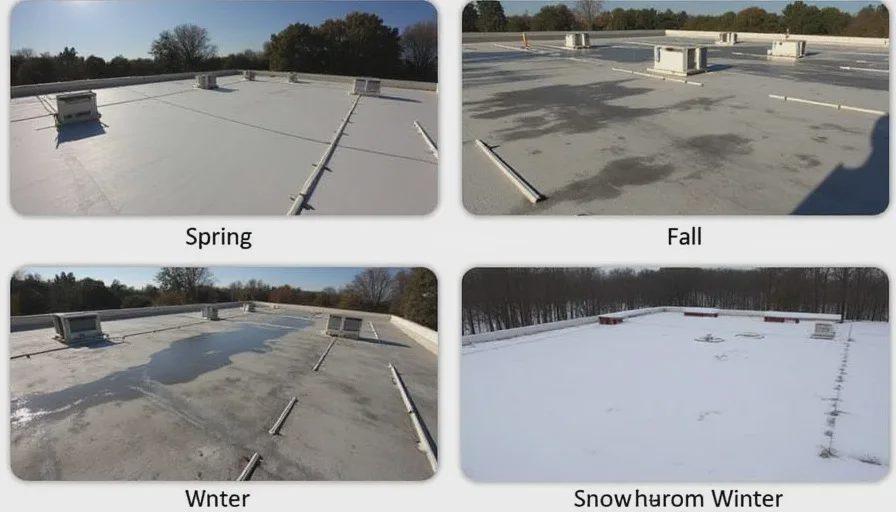
I've been doing this long enough to know that no facility manager follows a perfect schedule. You've got other fires. I get it. So let's be realistic.
There are four times a year you absolutely need to get on your roof. Not negotiable. Everything else is bonus.
Spring. After the snow melts, before the heavy rains. This is your biggest inspection. Walk every square foot. Look for winter damage — ice can lift flashings, snow can overwhelm drains. Bring a contractor if you can, especially if you had any issues over winter. Check every penetration, every seam, every edge. This is the inspection that sets up your entire year.
Summer. Focus on the hot spots — literally. Check areas around HVAC units, which absorb and radiate heat. Look for UV damage, chalking, blistering. Clear any debris that's accumulated. And here's something most people skip: pull your energy bills from the last 12 months. If you're using more cooling than last year, your insulation might be wet. That's a roof problem, not an HVAC problem.
Fall. After the leaves drop, before the freeze. Clean every drain, every scupper, every gutter. This is the single most important maintenance task you'll do all year. A clean drain is cheaper than any repair. While you're up there, check for ponding — if water sits more than 48 hours, you've got a slope issue that needs attention before winter.
Winter. Only if you're in a cold climate. Walk after major storms. Look for ice damming, snow accumulation on roof edges, any signs of ponding from melt. If you're in the South or Southwest, you can skip this one — but if you get freeze-thaw cycles, you need eyes on your roof at least once in January or February.
That's four walks. Four times a year you need to carve out time. Total time investment: maybe 12-15 hours annually. That's less than two working days. The emergency you avoid will take more time than that just in phone calls.
What to Look For on Every Walk

It doesn't matter if you're a roofing expert. You can spot most of this stuff with a little practice.
Drains. This is always first. Are they clear? Are the strainers intact? Standing water anywhere? If you see water, note where and how deep.
Edge metal. Is it secure? Any gaps? Any rust? Edge metal failures are one of the top leak sources. They're also easy to fix early.
Penetrations. Every pipe, vent, curb, skylight. Any cracked sealant? Any flashing that's pulled away? If you see separation, that's a leak waiting to happen.
Membrane condition. Look for blisters — bubble-like raised areas. Look for tears or splits. Look for wrinkling or loose spots. If you see something that looks wrong, it probably is.
Ponding. Are there areas where water stands longer than 48 hours? Mark them. If they're getting worse over time, you need to address the slope.
Debris. Trash, branches, leftover equipment. Anything on the roof that could block drainage or damage the membrane.
Take photos. I know you're busy, but just snap a few. Even your phone is fine. Date them. Keep them somewhere you can find later. I've seen warranty claims denied because the FM couldn't prove they did an inspection. A few photos would have saved them thousands.
The Documentation Habit Nobody Talks About
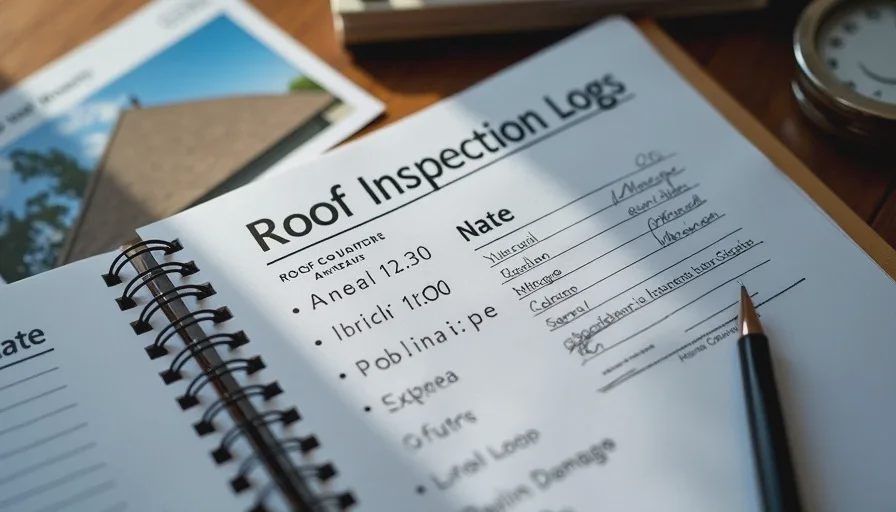
I'll be straight with you: most facility managers are terrible at documentation. They walk the roof, they see a problem, they fix it, and they move on. No log. No photos. No record.
Then two years later, a manufacturer's rep shows up to inspect a warranty claim and asks, "Where's your maintenance log?"
And the FM just stares.
Here's the minimum you need:
Date of every walk
Weather conditions
Who did the walk
What you found
What you fixed
Photos of any issues
That's it. A three-ring binder with these details puts you ahead of 90% of facility managers. If a warranty claim gets challenged, that binder is your defense.
Also, it helps you spot patterns. That area where you saw minor cracking in April? If you see it again in September, you know it's progressing. If you see the same ponding every spring, you know it's not a fluke. You can plan a real fix instead of reacting every year.
I walked a roof in Chicago last year where the FM handed me a binder with 12 years of inspection logs. That roof was 18 years old and looked better than some 8-year-old roofs I see. The binder wasn't a burden — it was a tool.
The Honest Truth About Who Should Do the Work
Let's be clear about something. You can walk your own roof. You can inspect it. You can clean drains. But unless you're a trained roofing professional, you should not be doing repairs.
Patch a seam wrong? You'll make it worse. Weld TPO without the right equipment? You'll create a bigger failure. Re-seal a flashing with the wrong sealant? It'll fail in six months.
So here's my recommendation: walk the roof yourself. Build that calendar. But when you find an issue, bring in a pro for the fix. Find a contractor you trust — not just the cheapest one, not just the one who shows up fastest. Find someone who does good work and backs it up with a warranty.
I've seen facility managers try to save money by doing their own repairs. I've never seen one save money in the long run. The repair fails, the damage spreads, and the bill doubles.
Frequently Asked Questions
1. How often do I really need to walk my commercial roof?
Minimum two times a year — spring and fall. If your roof is over 15 years old or has a history of problems, walk it quarterly. And always walk it after any major storm.
2. What's the single most important thing I can do?
Keep your drains clean. I can't say this enough. Clogged drains cause ponding. Ponding causes more membrane damage than almost anything else. Clean drains are cheap, fast, and prevent huge repairs.
3. Do I need to hire a contractor for every inspection?
No. You can do basic walks yourself. But you should have a professional do a full inspection at least once a year. They'll catch things you'll miss — hidden seam issues, insulation moisture, early signs of failure.
4. How do I get my management to approve a maintenance budget?
Show them the math. Get a quote for a full replacement. Then show them that $5,000 a year in maintenance will delay that replacement by 5-10 years. Most management teams understand that math. If they don't, show them your emergency repair bills from last year and ask which they'd rather pay.
5. What should I do if I find a problem during my walk?
Document it. Take photos. Call a contractor you trust and get a repair estimate. Then prioritize — is it urgent (leaking now) or can it wait 30-60 days? Mark it on your calendar and follow up. Don't assume the contractor will call you. They won't.
6. How long does a roof maintenance walk take?
For a 20,000-square-foot roof, plan on 1-2 hours for a basic walk, 3-4 hours for a detailed inspection. Larger roofs take longer. It's not nothing, but compared to the time you'll spend on an emergency, it's a bargain.
7. What if I can't get onto my roof safely?
Then don't go up there. Hire someone who can. Some roofs are too steep, too high, or too dangerous for casual walking. A professional crew will have fall protection and safety training. Your life is not worth saving $200 on an inspection.
8. How do I find a good roofing contractor for maintenance?
Look for someone with commercial experience, not just residential. Ask for references from other facility managers. Check their licensing and insurance. And start with a small job first — clean some drains, repair a minor leak — to see if they show up on time, do good work, and communicate well.
9. What's the most common mistake facility managers make with roof maintenance?
Waiting until there's a problem. Most FMs don't think about their roof until it leaks. By then, the damage has spread, the repair is expensive, and they're making decisions under pressure. The best time to fix a roof issue is before it's a roof issue.
10. Can a roof maintenance calendar really prevent all emergencies?
No. Major storms and freak events happen. But a well-maintained roof is more resilient. It handles extreme weather better. And when something does happen, you have documentation to support your insurance claim. It doesn't prevent everything, but it prevents the ones you could have avoided.

Owner Letters
0 lettersNo letters yet — be the first to write one.