
How to Clean Ceiling Fans Without Making a Bigger Mess

Learning how to clean ceiling fans is less about scrubbing hard and more about controlling dust, protecting the motor, and working safely at height. A neglected fan can spread a fine layer of dust across desks, floors, bedding, and merchandise every time the blades turn. In a home, that means more housework. In an office, retail space, warehouse office, or apartment common area, it can also make the building look poorly maintained.
The good news is that most ceiling fans need only a few inexpensive supplies and a repeatable process. You will usually need a step ladder, a microfiber cloth, an old pillowcase, mild dish soap, warm water, a vacuum with a brush attachment, and a dry towel. Do not spray cleaner directly onto the fan. Liquid can run into the motor housing, light kit, switch, or electrical connections.
Start with safety and a dust-control plan
Before figuring out how to clean ceiling fans, shut the fan off at the wall switch and wait until every blade has stopped. If the fan has a remote, turn that off too. For a hardwired fixture in a commercial space, switching off the circuit breaker is the more cautious choice, especially if you will remove parts or work near the motor housing. Do not rely on the pull chain alone when the fan is within reach of wiring or a light assembly.
Choose a solid, level ladder rather than a chair, bucket, rolling desk, or stack of boxes. The ladder should let you work with your shoulders below the fan instead of stretching sideways. In a two-story entry, stairwell, or large commercial room, stop and use the right extension equipment or hire a maintenance professional. A fall can cost far more than a cleaning visit.
Move furniture out of the drop zone and cover nearby electronics. If the fan is over a bed, place a sheet over the mattress. In a facility, protect computers, point-of-sale equipment, display shelving, and food-contact surfaces before disturbing the dust.
How to clean ceiling fans blade by blade
The old pillowcase method is usually the cleanest starting point. Slide a pillowcase over one blade, press the fabric gently against the top and bottom surfaces, and pull it toward the blade tip. The dust stays inside the case instead of falling onto the floor. Empty the pillowcase outdoors or into a trash bag, then repeat for each blade.
After the heavy dust is removed, mix a small amount of mild dish soap into warm water. Dampen a microfiber cloth, wring it nearly dry, and wipe each blade from the center outward. Use a second dry cloth immediately afterward. Excess water can swell wood or composite blades, leave streaks on painted surfaces, or drip into the motor if you wipe too aggressively near the mounting hardware.
For stubborn grease in a kitchen, workshop, or break room, use a diluted degreasing cleaner on the cloth rather than on the fan. Test an inconspicuous area first. Avoid abrasive powders, steel wool, bleach, and solvent-heavy products. They can dull the finish, remove printed labels, or damage plastic components.
A vacuum brush helps around the canopy, downrod, blade brackets, and upper motor housing. Keep the nozzle from pressing against the blades because older blades can flex or crack. If a blade is loose, bent, chipped, or wobbling, cleaning is not the whole problem. Tighten accessible screws only when the power is off, and document any damaged part for replacement.
Cleaning the motor housing, light kit, and pull chains
The motor housing needs a lighter touch than the blades. Dust it with a dry microfiber cloth or a vacuum brush. If the housing has a washable metal or plastic cover, remove it only according to the manufacturer’s instructions. Let any washed part dry completely before reinstalling it. Never pour water into ventilation slots, and never use a wet cloth around an energized light kit.
Glass globes and removable shades can often be washed separately in warm soapy water. Place them on a folded towel so they do not strike a sink or hard counter. Dry them fully before fitting them back. Check that the retaining screws are evenly tightened; overtightening can crack glass, while a loose globe can rattle when the fan runs.
Wipe pull chains, remote holders, and wall controls with a barely damp cloth. These areas collect skin oils and dust, but they also contain small openings where moisture can enter. If a light flickers, the fan hums, the speed changes unexpectedly, or the housing becomes unusually hot, stop using it and arrange an electrical inspection.
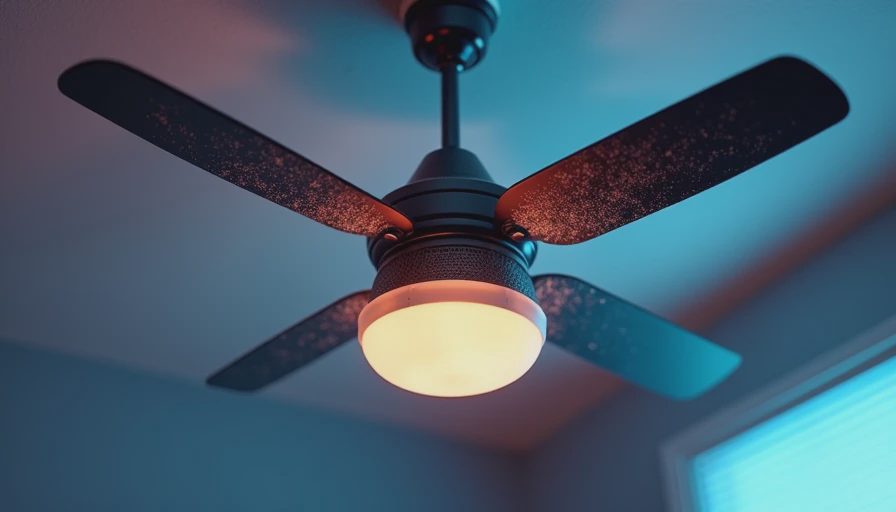
How to clean ceiling fans in offices and commercial buildings
Commercial cleaning needs a schedule, not a once-a-year scramble. In a dusty warehouse office, construction-adjacent space, restaurant dining area, or busy lobby, inspect fans monthly and clean them every one to three months. Cleaner offices with limited airborne dust may need a quarterly cycle. Record the date, room, fan location, visible condition, and any repair issue in the facility log.
A two-person process is safer for recurring maintenance. One person stabilizes the ladder and controls the work area while the other cleans. For fans mounted above a stairwell, open retail floor, or high ceiling, use a qualified service company with appropriate access equipment. Do not improvise with a lift, and do not clean while customers or employees are moving below.
Before approving a maintenance visit, ask whether the price includes ladder or lift access, blade cleaning, light-globe cleaning, dust protection, and disposal. A small residential fan may take 15 to 30 minutes. Several high-mounted commercial fans can require a broader scope, especially when access, scheduling, and floor protection are involved. The cheapest quote is not useful if it leaves dust on merchandise or misses a loose bracket.
How to clean ceiling fans without causing damage
Never bend blades to reach their underside. Uneven pressure can change the fan’s balance and create wobbling, clicking, or vibration. Do not hang tools, rags, or buckets from the fan. Avoid spinning the blades by hand while standing on a ladder; accidental movement can destabilize you and put stress on the blade brackets.
If the fan still wobbles after cleaning, inspect the blade screws, blade alignment, mounting bracket, and ceiling box. A balancing kit can help with a minor blade-weight difference, but it cannot correct a loose electrical box or failed support. Repeated noise often points to a mechanical issue rather than dirt. In a commercial building, note the symptom and location rather than repeatedly tightening random screws.
Dust on a fan can also reveal a larger housekeeping problem. If blades become coated within days, inspect nearby supply vents, filters, open doors, renovation work, and storage areas. Fine construction dust can reach bearings and controls, while grease can build up faster in food-service environments. Cleaning removes the symptom; controlling the source reduces the workload.
A practical maintenance routine that works
Start with a monthly visual check. Look for dust buildup, drooping blades, cracked plastic, loose light covers, damaged pull chains, and unusual stains. Schedule deeper cleaning before seasonal changes when fans are likely to run more often. Mark each fan with a room or asset number so a technician can identify the correct fixture without guessing.
For a typical residential or small-office fan, use this sequence: shut off power, protect the area, vacuum loose dust, use the pillowcase on each blade, wipe with a nearly dry microfiber cloth, clean removable shades separately, dry every part, and test the fan from the floor. If the fixture shakes, clicks, smells hot, or fails to start, switch it off again and arrange repair.
Knowing how to clean ceiling fans helps protect finishes and indoor cleanliness, but it does not replace electrical or structural judgment. The roof doesn’t care about the sales pitch, and neither does a loose ceiling box: evidence matters. Clean the fixture carefully, document defects, and bring in a qualified professional when access or wiring makes the task unsafe.
Keep Reading

Upholstery Cleaner: A Practical Guide for Commercial Facilities
Upholstery cleaner guidance for commercial facilities: compare formulas, protect...

Where to Buy Furniture: A Practical Guide for Commercial Property Buyers
Where to buy furniture for a commercial office, waiting room, or break area: com...

Palm Tree Types: A Practical Guide for Property Owners
Palm tree types explained for property owners: learn how species, roots, fronds,...
Owner Letters
0 lettersNo letters yet — be the first to write one.