
How to Tell If an Aging TPO Roof Still Has Repairable Life Left
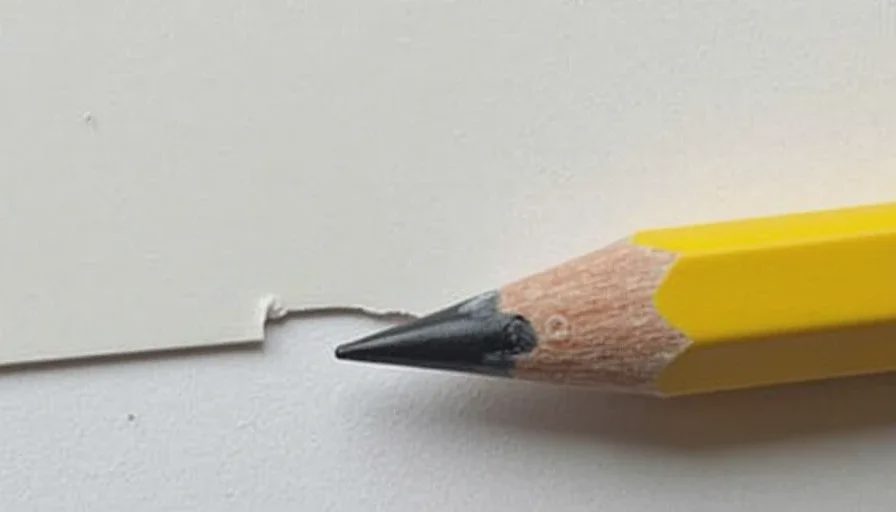
Your TPO roof is 14 years old. It's weathered, a bit chalky, and has a few seam splits near the drains. A contractor tells you it's time for a full replacement – $80,000.
But you're not sure. The roof isn't leaking everywhere. Most of it looks okay. Is that contractor overselling – or are you in denial?
The truth lies somewhere in between. TPO (thermoplastic polyolefin) roofs have a typical design life of 15–20 years. But actual service life varies wildly – from as little as 10 years on poorly installed or heavily ponded roofs, to over 25 years on well‑maintained, low‑traffic roofs.
The key question: Does your TPO roof still have repairable life left – or is it past the point where repairs make financial sense?
Here's a field‑tested framework to answer that question – with evidence, not hope.
The 5‑Point TPO Health Assessment
Answer these five questions honestly. Each one reveals a critical dimension of your TPO's condition.
1. Seam Integrity – The #1 TPO Failure Point
What to look for: Walk the roof and inspect every seam – both field seams (where membrane sheets are welded together) and flashings around penetrations. Look for:
Open seams – visible gaps where the weld has separated.
Shrinkage – seams that have pulled back from edges or terminations.
Brittle welds – if you can easily peel a seam apart with your fingers (or a putty knife), the weld has lost its strength.
Repairable if: Less than 5% of the total linear footage of seams shows any failure, and failures are isolated (e.g., only around one drain or one HVAC curb).
Not repairable if: More than 10% of seams are failing across multiple zones, or seams show widespread brittleness – meaning the membrane has aged uniformly and any repair will be temporary.
What to do: Mark each failed seam on a roof plan. If the bad seams are few and localized, they can be patched with new TPO and heat‑welded over the existing membrane. If they're widespread, you're treating a systemic problem – not isolated defects.
2. Membrane Surface Condition – Cracking, Chalking, and Embrittlement
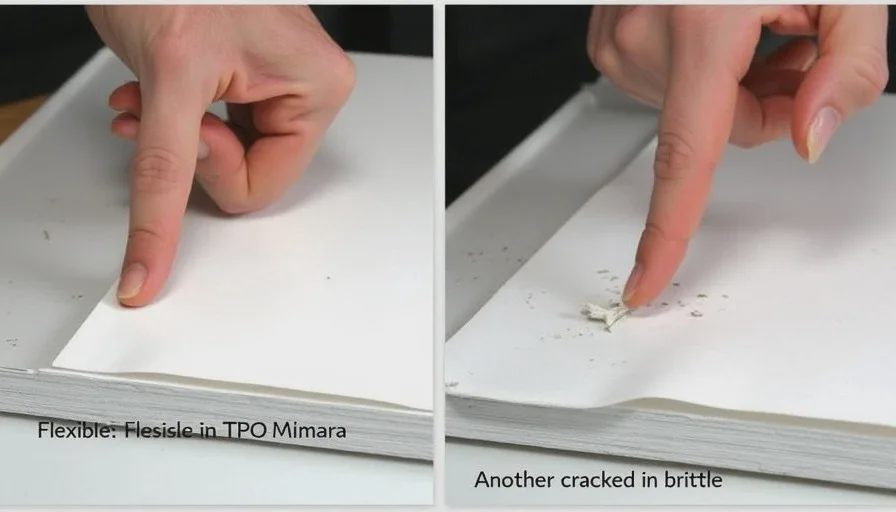
What to look for:
Surface cracking – fine "spiderweb" cracks on the membrane surface, especially in areas exposed to intense UV.
Chalking – a white, powdery residue that rubs off on your hand. This indicates the top layer has degraded and lost plasticizers.
Brittleness – press your finger firmly into the membrane. If it feels hard and unyielding, or if it cracks under pressure, the membrane has lost flexibility.
Repairable if: Cracking is superficial (less than 1/16 inch deep) and covers less than 20% of the roof area. Chalking is moderate but the membrane still flexes when pressed.
Not repairable if: Cracking penetrates through the membrane thickness, the membrane is stiff and cracks when bent, or chalking is heavy across more than 50% of the roof – indicating severe UV degradation.
What to do: Surface‑level degradation can sometimes be addressed with a coating (restorative acrylic or silicone) that provides a new UV‑resistant layer. But if the membrane itself is brittle, coating will not restore flexibility – it will crack as the membrane moves underneath.
3. Insulation Condition – The Hidden Variable
What to look for: You can't see insulation directly, but you can infer its condition through:
Moisture survey – infrared or nuclear gauge – as discussed in our previous article. For TPO, even 15% wet insulation is a red flag because TPO seams are vulnerable.
Soft spots – areas where the roof feels spongy underfoot, indicating insulation breakdown or saturation.
Energy bills – unexplained increases of 10%+ year over year.
Repairable if: Less than 15% of the insulation is wet, and wet areas are localized and accessible for cut‑out and replacement.
Not repairable if: More than 25% of insulation is wet, or wetness is diffuse and cannot be pinpointed without removing large sections. In this case, you're not just fixing the membrane – you need to fix the insulation, and the cost of doing that piecemeal often exceeds a full replacement.
What to do: If insulation is wet but localized, cut out the wet sections, replace with new insulation, and patch the membrane over those areas. If wetness is widespread, a sectional replacement (with new insulation and membrane) may be better than piecemeal patching.
4. Ponding and Drainage – The Accelerator
What to look for: TPO is less tolerant of ponding than EPDM or PVC. Prolonged ponding accelerates seam degradation and promotes algae growth. Check:
How long water stands after a rain – 48+ hours is a yellow flag.
Depth of ponding – more than ½ inch is a red flag.
Evidence of algae or moss in ponded areas – indicates chronic moisture.
Repairable if: Ponding is shallow (under ¼ inch) and drains within 24–48 hours. Correction can be achieved with drain cleaning or minor tapered insulation additions.
Not repairable if: Deep ponding (>1 inch) persists for over a week, or the roof has no positive slope – requiring extensive structural work or a full re‑cover with tapered insulation.
What to do: If ponding is mild, clean drains and consider adding drain inserts or small tapered crickets. If ponding is severe and has caused membrane degradation, you're looking at a recover with full slope correction – which is often a major project.
5. Repair History – The Behavior Signal
What to look for: How many times has this TPO roof been patched in the last 5 years?
0–2 repairs: Normal maintenance. The roof has been reliable.
3–5 repairs: You're chasing problems. The pattern suggests the membrane is in decline.
6+ repairs: You've already spent 30–50% of a replacement cost on patches. A patch is no longer a plan.
Repairable if: Fewer than 3 repairs in the last 5 years, and repairs have been successful (no repeat leaks in the same spots).
Not repairable if: More than 5 repairs, especially if they keep coming back to the same area – indicating a systemic failure, not an isolated one.
What to do: Calculate your total repair spending over the last 3 years. If it exceeds 25% of a replacement quote, it's time to seriously consider replacing. If it's low, repairs are still cost‑effective.
The TPO Decision Matrix
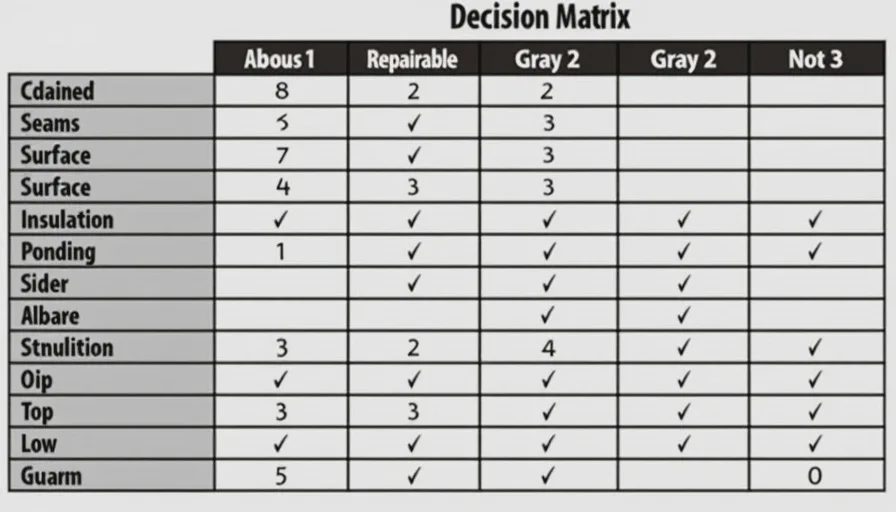
Score each factor:
Factor | Repairable (Score 1) | Gray Zone (Score 2) | Not Repairable (Score 3) |
|---|---|---|---|
Seam integrity | < 5% failed, isolated | 5–10% failed, multiple zones | > 10% failed, widespread brittleness |
Surface condition | Cracks superficial, still flexible | Moderate chalking, some stiffness | Heavy cracking, brittle, no flexibility |
Insulation | < 15% wet, localized | 15–25% wet, some diffuse areas | > 25% wet, widespread saturation |
Ponding | Drains within 48 hrs, shallow | 48–72 hrs, moderate depth | > 72 hrs, deep, no slope |
Repair history | 0–2 repairs in 5 years | 3–5 repairs | 6+ repairs, recurring issues |
Total Score:
5–7: Your TPO roof has significant repairable life left. Invest in targeted repairs, a coating, and proactive maintenance.
8–10: You're in the gray zone – repairs may buy you 3–5 more years, but start planning for a sectional or full replacement. Get multiple bids.
11–15: Repairs are not cost‑effective. The roof has reached its functional end. Full replacement is the smartest financial move.
When Repairs Actually Work on TPO
Even on an aging TPO roof, specific repairs can be highly effective:
Seam patching: A failed seam can be cut back and re‑welded with new TPO strip. This works well if the surrounding membrane is still sound.
Flashing replacement: Flashing around penetrations often fails before the main field. Replacing flashing can stop leaks and buy years of life.
Coating: A high‑quality silicone or acrylic coating can restore reflectivity, seal minor cracks, and add 5–7 years of life – but only if the membrane is still flexible and the insulation is dry.
Sectional replacement: As we covered in a previous article, replacing only the failing sections (e.g., around drains, ponding zones) can extend the whole roof's life.
The catch: Repairs on TPO become progressively less effective as the membrane ages. A seam repair at year 10 might last 8 years. The same repair at year 18 might last 2 years. The cost per "year of life gained" goes up as the roof ages.
The 3‑Year Rule
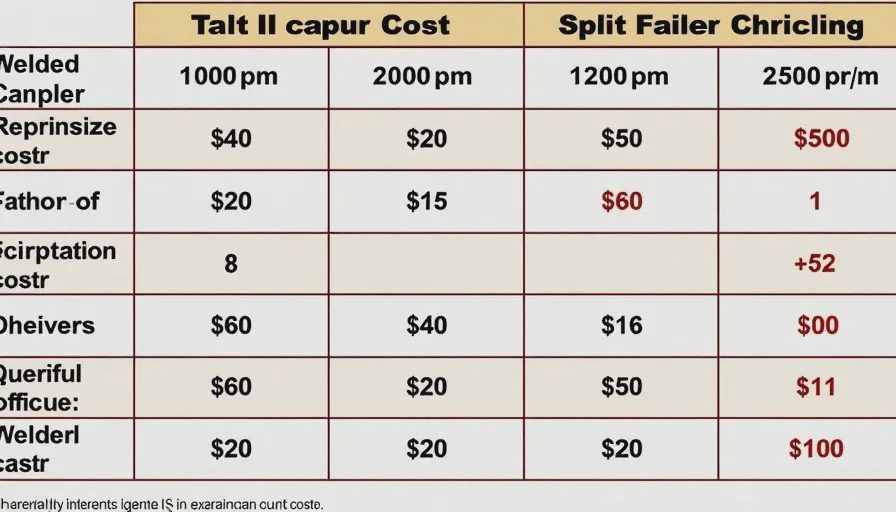
Here's a simple heuristic I use with building owners:
If you can get 3 or more years of additional life from a repair that costs less than 20% of a full replacement, do the repair.
If the repair costs more than 20% of replacement, or if you're unlikely to get 3 years out of it, replace.
Why 3 years? Because a full replacement resets the clock for 20 years. If you're only buying 2 years, the transaction costs (mobilization, disruption, risk of failure) are too high. At 3+ years, the math starts to work.
Keep Reading

Owner Letters
0 lettersNo letters yet — be the first to write one.