
Recover Roof Systems Explained: When Going Over the Existing Roof Is Smart
You've heard the term: "We can just go over the existing roof." It sounds too good to be true – a new roof without the cost, mess, and time of tearing off the old one.
For some buildings, it is a smart, cost‑effective strategy that delivers 10–15 more years of service at 50–60% of the cost of a full tear‑off.
For others, it's an expensive mistake that traps moisture, accelerates deck corrosion, and sets you up for a bigger, more costly failure down the road.
The difference is not luck. It's diagnosis.
A recover (also called a "re‑cover" or "overlay") is a legitimate roofing technique – but it's not for every roof. Here's how to know if your roof qualifies, what the risks are, and how to make the call with confidence.
What Exactly Is a Recover?
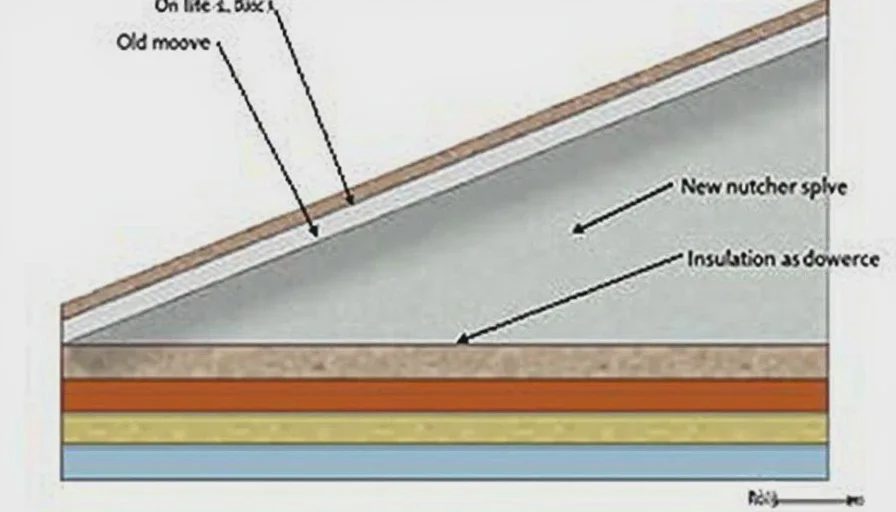
Definition: A recover is the installation of a new roof system directly over an existing, intact roof assembly – without removing the old membrane, insulation, or flashings. The new system can be a single‑ply membrane (TPO, EPDM, PVC), modified bitumen, or a fluid‑applied coating, applied over a separation layer (often a cover board or a fabric reinforcement).
What it is NOT: A patch, a repair, or a coating. A recover is a complete new roof system that adds a new waterproofing layer and new surface, with all new flashings and edge details – just laid on top of the old one.
The 5 Critical Conditions for a Successful Recover
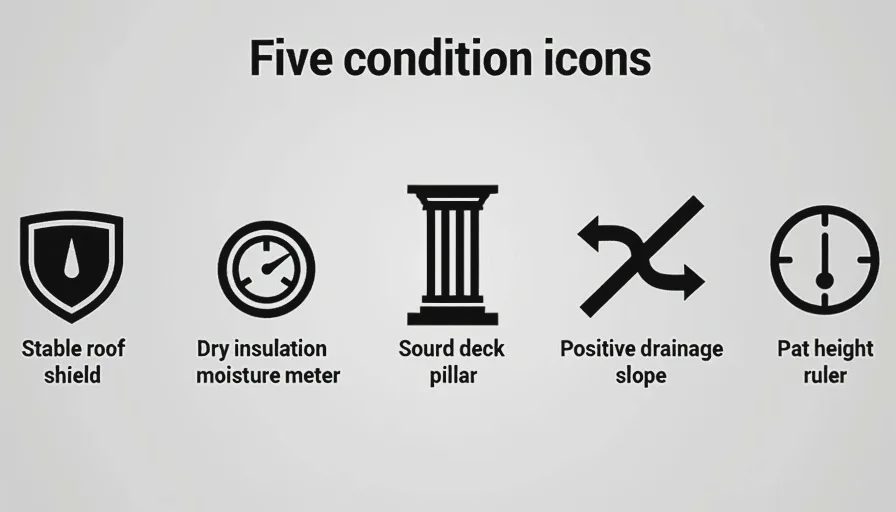
Not every roof can be recovered. Before you even consider it, your existing roof must meet these five conditions:
Condition 1: The Old Roof Is Stable – No Active Deterioration
The existing membrane must be intact, fully adhered (or mechanically attached with no widespread looseness), and free of large blisters, tears, or open seams. If the old roof is falling apart, a recover just covers up a moving target – and the new system will fail from the movement underneath.
How to verify: A thorough visual inspection by a qualified professional, checking for blisters > 2 sq ft, open seams longer than 3 feet, or any area where the membrane lifts easily from the substrate.
Condition 2: The Insulation Is Dry – Verified by Moisture Testing
This is the #1 killer of recovers. If there is more than 15–20% wet insulation in the old roof, a recover will trap that moisture. The moisture will migrate upward, degrade the new membrane from below, and cause blistering, delamination, and premature failure.
How to verify: Infrared thermography or nuclear moisture gauge survey. Core samples in suspect areas. The report must show less than 15% total wet area – and any wet spots must be isolated and removable without destroying the whole roof.
Condition 3: The Structural Deck Is Sound
The old roof assembly adds weight. A recover adds more weight – new membrane, new cover board, new insulation (if any). Your deck must be able to support the added load, especially if there is already a built‑up roof or a heavy ballasted system underneath.
How to verify: A structural engineer's assessment, especially for older buildings or roofs with existing gravel ballast. If the deck is marginal, a recover may exceed the allowable load.
Condition 4: Positive Drainage Exists – or Can Be Achieved
A recover with a new membrane will not fix a ponding problem. Water sitting on the roof will degrade the new membrane just as it degraded the old one. If your roof has significant low spots, you need to correct the slope – either by adding tapered insulation (which adds weight and cost) or by fixing drains – before you recover.
How to verify: Walk the roof after a rain; or do a 48‑hour ponding test. If water stands longer than 48 hours, you must address drainage before any recover.
Condition 5: The Height of Penetrations and Parapets Allows for Added Thickness
A recover adds 1–2 inches of new material (insulation, cover board, membrane). This reduces the exposed height of parapet walls, HVAC curbs, and other penetrations. If the new roof comes too close to the top of the curb or the edge, you risk water backing up under the new system or compromising the edge terminations.
How to verify: Measure all parapets, curbs, and perimeter edges. Ensure they have at least 2 inches of additional height above the proposed new roof elevation. If not, you may need to extend curbs or add height to edge metal – which adds cost and may tip the balance against a recover.
The Upside: Why Recover Is Often a Great Option
When all five conditions are met, a recover offers powerful advantages:
Benefit | Impact |
|---|---|
Cost savings | 40–60% less than a full tear‑off (you avoid demolition, disposal, and deck prep) |
Speed | Installation is 30–50% faster – no tear‑off time, no weather exposure of the interior |
Minimal disruption | No noise, debris, or odors from tearing off the old roof – tenants and operations continue with few complaints |
Energy efficiency | You can add new insulation with higher R‑value, or a reflective membrane (cool roof) without removing the old insulation |
Warranty | Many manufacturers offer full 20‑year warranties on recover systems when installed over approved existing roofs |
The Downside: When a Recover Bites Back
Recovers are not magic. They come with real trade‑offs:
1. You Don't See What's Underneath
The biggest risk is the unknown. Your existing roof may have hidden problems – wet insulation, rusting deck, termite damage – that only become visible after tear‑off. A recover seals these problems in, where they can worsen unseen.
The fix: Do rigorous pre‑recover testing – moisture surveys, core samples, and deck inspections from below (if accessible). If you can't verify the substrate, don't recover.
2. Future Replacement Is More Expensive
When you eventually need a full tear‑off (after the recover reaches its end of life), you now have two roof systems to remove – the old one and the recover. Disposal costs double, and the labor is more difficult.
The trade‑off: You delay the full replacement cost by 10–15 years, but you pay more per square foot for that eventual tear‑off. For many owners, the time value of money still makes the recover worthwhile.
3. Transition Complexity
A recover often requires a transition detail where the new roof meets the old – if you're not recovering the entire roof. That transition is a potential leak point.
The fix: Recover the entire roof area if possible. If you're doing a partial recover, use a well‑engineered transition strip with positive slope and a separate flashing detail.
4. Reduced Curb Height and Edge Clearance
As noted above, if your parapets are low, adding 2 inches of new roof can reduce the height of the top of the edge metal – potentially making it easier for water to blow over the edge.
The fix: Plan to extend all curb heights and edge metal – factor this into the cost comparison.
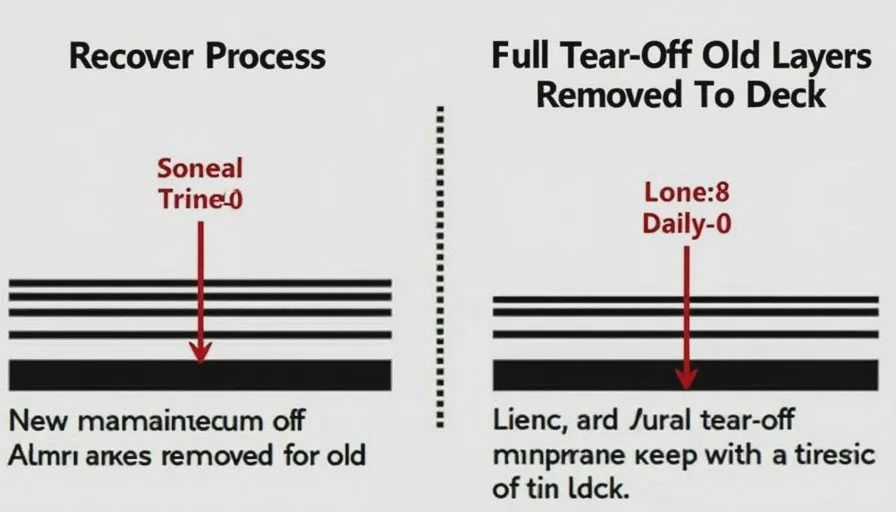
The Decision Matrix – Recover vs. Full Tear‑Off vs. Coating
Factor | Recover | Full Tear‑Off | Coating |
|---|---|---|---|
Cost (relative) | 50–60% of full | 100% | 20–30% of full |
Service life added | 10–15 years | 20–25 years | 5–10 years |
Requires dry insulation? | Yes (<15% wet) | No (you replace it) | Yes (<15% wet) |
Fixes ponding? | Only if you add taper | Yes (build new slope) | No |
Allows deck inspection? | No | Yes | No |
Allows R‑value upgrade? | Yes (add new insulation) | Yes (replace all) | No (minimal) |
Future tear‑off complexity | Higher (two layers) | Standard | Slightly higher (coating grinds) |
Best for | Sound, dry, stable roof with 5+ years of life left | Old, wet, failing, or structurally compromised roof | Minor surface weathering only |
When a Recover Is a Clear "No"
Flat out reject a recover if:
The existing roof has more than 25% wet insulation – you're just sealing in a swamp.
The roof has widespread membrane failure – more than 5 open seams, large blisters, or delaminated sections – the substrate is unstable.
The roof has structural problems – sagging deck, rusted joists, wood rot – you need to see and fix those, not cover them.
You have chronic ponding that can't be corrected with tapered insulation (due to weight limits or cost) – water will defeat the new roof.
You plan to hold the building for more than 15 years – a recover now means you'll face a full tear‑off in 10–15 years anyway; a full tear‑off now may be more cost‑effective over 25 years.
Real‑World Example: Recover Done Right
Project: 25,000‑sq‑ft medical office building with a 12‑year‑old EPDM roof. The membrane was weathered and had minor cracking, but no leaks, no ponding, and no wet insulation (verified by moisture scan). The deck was sound, and parapets were high enough.
Option A (Full Tear‑Off): $140,000 – 3 weeks disruption.
Option B (Recover): Add a ½‑inch cover board, new 60‑mil TPO membrane (white, reflective), new edge metal, new flashing at all penetrations. Cost: $72,000 – 10 days of work. Tenant disruption minimal.
Result: The owner saved $68,000, got a 20‑year warranty, and reduced cooling costs by 12% due to the reflective white surface. In 14 years, they'll plan for a full tear‑off – but they've bought valuable time at an excellent cost‑benefit.
How to Vet a Contractor for a Recover
Recovers require specialized knowledge – not every roofer knows how to properly prepare an existing roof for a recover. Ask these questions:
"What is your pre‑recover inspection protocol?" – They should do a moisture survey, core samples, and a detailed visual inspection – not just a glance from a ladder.
"How do you handle minor wet spots?" – If they find isolated wet insulation (say, 10% of the roof), do they cut it out and patch, or just leave it? The right answer is to cut out the wet area and replace it with new insulation before the recover.
"What separation layer do you use?" – A cover board (gypsum or wood fiber) is nearly always required between the old membrane and the new system – not just a loose fabric. If they don't mention a cover board, be cautious.
"How do you terminate the new membrane at edges and curbs?" – All edge metal, curb flashings, and penetrations must be fully replaced – not just sealed over. The new roof is only as good as its terminations.
"Will you provide a 10‑year or 20‑year warranty on the recover?" – Many manufacturers offer the same warranty on a recover as on a full tear‑off, provided the substrate meets their criteria. If a contractor can't get a manufacturer's warranty for the recover, that's a sign that the existing roof may not qualify.
A recover is not a cheap shortcut – it's a precise surgical option. When done on the right roof, with the right preparation, it's one of the best ROI decisions you can make. When done on the wrong roof, it's a high‑cost mistake that will haunt you for years.
Recover if:
The existing roof is structurally sound, dry, and stable.
You need to save money and minimize disruption.
You're willing to accept a future full replacement cost, delayed by 10–15 years.
Tear‑off if:
The roof is wet, failing, or structurally compromised.
You have the budget and want a clean slate with a single long‑term warranty.
You plan to hold the building for 20+ years and want the lowest long‑term total cost.
Keep Reading
Quartz vs quartzite: A Practical Countertop Comparison
Quartz vs quartzite: compare durability, cost, maintenance, appearance, and inst...
Stair Treads for Commercial Roof Access: A Practical Safety Guide
Stair treads can reduce slip risk on commercial access stairs. Compare materials...

Loft House Roofing: A Practical Guide to Roof Repairs and Replacement
Loft house roof guidance for owners: spot drainage, flashing, insulation, and me...
Owner Letters
0 lettersNo letters yet — be the first to write one.