
What Is Included in a Real Commercial Roof Replacement Scope of Work?
You've received three proposals for a new commercial roof. They all list a price per square foot, a membrane type, and a warranty. They all look… similar.
But when you dig into the fine print, one includes insulation replacement, edge metal, and drain upgrades. Another doesn't. One includes a full tear‑off and disposal; another assumes you'll leave the existing roof in place. One guarantees seam adhesion testing; the other just says "industry standard."
The difference between a complete scope and a cut‑rate scope can be $20,000 – or more – on a 20,000‑sq‑ft roof.
A real commercial roof replacement scope of work is not a one‑page bullet list. It's a detailed technical document that defines exactly what the contractor will do, what materials they'll use, how they'll handle unknowns, and what you're getting for your money.
Here's what that scope must include – and what to watch for when you compare proposals.
Why the Scope of Work Matters More Than the Price
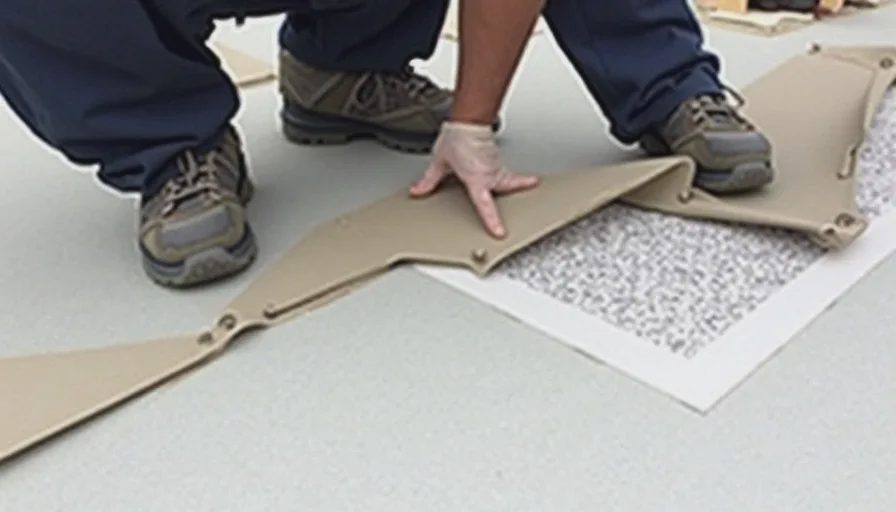
Most owners focus on the bottom line. That's natural – but it's also a trap. A cheap scope often omits critical work that you'll pay for later as change orders or premature failures. An expensive scope might include unnecessary extras that pad the contractor's margin.
A well‑written scope:
Protects you from surprises (no hidden charges for "unexpected" deck repairs)
Allows apples‑to‑apples comparison between contractors
Ensures you get a roof that performs for its intended life
Provides a legal document you can enforce if the work doesn't meet specifications
A vague scope:
Leaves room for interpretation – and costly change orders
Hides essential work (like insulation replacement or edge metal) that will be added later
Makes it impossible to hold the contractor accountable
The rule: If the scope doesn't fit on two pages (minimum), it's probably incomplete.
The 8 Essential Sections of a Real Commercial Roof Replacement Scope
1. Project Overview and Site Conditions
What it should include:
Building address, roof area (measured, not estimated), and access points
Existing roof system type, age, and current condition summary (referencing an inspection report if available)
Hours of work, noise restrictions, and any tenant occupancy considerations
Safety protocols – fall protection, debris containment, and emergency procedures
The contractor's point of contact and project manager
Why it matters: This sets the context. If the contractor hasn't even measured the roof accurately, expect change orders. And if they don't have a plan for occupant safety, they're cutting corners.
What's often omitted: Access restrictions (e.g., only after business hours), which can add significant labor costs if not pre‑planned. Or the need to protect rooftop equipment (HVAC units, antennas) during work.
2. Removal and Disposal (Tear‑Off)
What it should include:
Whether the existing roof will be completely removed (full tear‑off) or left in place (recover). Full tear‑off is almost always preferred for long‑term performance.
Depth of removal – down to the structural deck, or only the membrane and insulation layers?
Method of disposal – dumpsters on site or hauling away? Who pays for landfill fees?
Protection of the deck during removal – no gouging, no damaging the structural surface
Dust and debris control – how they'll keep the building interior clean
Why it matters: Full tear‑off allows you to inspect the deck, replace rotten wood or rusted metal, and ensure a clean substrate for the new system. Leaving the old roof in place (recover) saves money upfront but hides problems and shortens the new roof's life.
What's often omitted: The cost of disposing of wet insulation (which is heavier and costs more to landfill). Or the allowance for emergency deck repairs – many contracts exclude them, so they become change orders.
3. Deck Preparation and Repairs
What it should include:
Inspection of the deck after tear‑off – with photos and a written report
Repair allowance: e.g., "Up to 5% of deck area will be repaired at no extra cost; additional repairs billed at time and materials with owner's prior approval."
Specific repair methods: replacing rotted wood, patching rusted metal, filling spalled concrete, and priming surfaces
Fastener pull‑out testing – to ensure screws will hold in the deck (especially important for mechanically attached systems)
Why it matters: The deck is the foundation. If it's compromised, no membrane will perform well. But deck repairs can be expensive – you need to know who bears the risk.
What's often omitted: Any allowance for deck repairs – the contractor may state that repairs are "extra" but not give you a budget or a per‑unit price, leaving you vulnerable to unlimited change orders.
4. Insulation System
What it should include:
Insulation type and thickness – e.g., polyiso, EPS, XPS, with specified R‑value per local energy code
Number of layers and attachment method – mechanically fastened, adhered, or loose‑laid
Tapered insulation – if needed to create positive slope to drains (specify minimum slope, e.g., ¼ inch per foot)
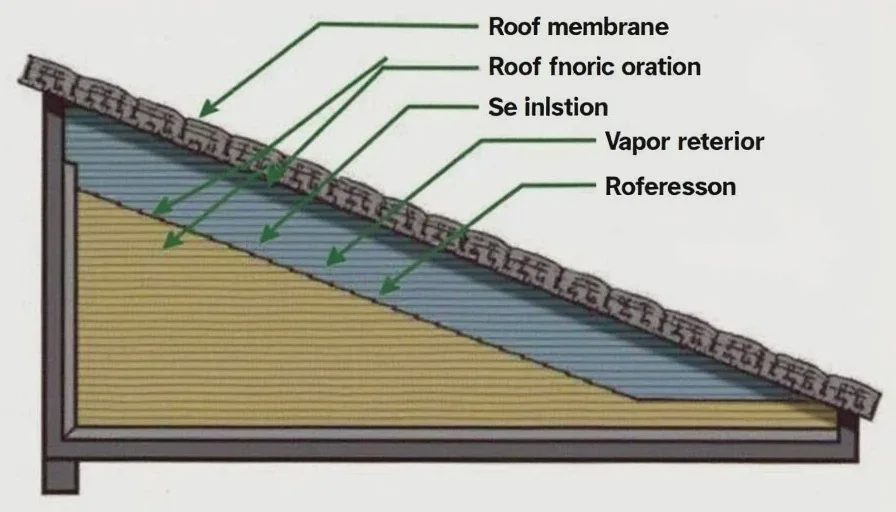
Cover board – a high‑density board (gypsum or wood fiber) over the insulation to provide a smooth, durable substrate for the membrane (critically important for single‑ply systems)
Moisture barrier / vapor retarder – if required by climate zone or code
Why it matters: Insulation is the second most expensive component after the membrane. Skimping on thickness or omitting a cover board will reduce energy efficiency and shorten membrane life. Tapered insulation is essential for drainage – but it's often an upgrade.
What's often omitted: The cover board – many contractors skip it to save cost, but without it, the membrane is more vulnerable to puncture and foot‑traffic damage. Also, vapor retarder placement is often overlooked, leading to condensation issues.
5. Membrane System
What it should include:
Membrane type, manufacturer, and product name – e.g., "60‑mil TPO by GAF, EverGuard® TPO"
Attachment method – fully adhered, mechanically attached, or ballasted (specify fasteners and plates)
Seam details – heat‑welded (for TPO/PVC) or adhesive (for EPDM); specify seam width and welding temperature
Membrane thickness – in mils (not just "standard" – 45, 60, or 80 mil)
Flashing details – all penetrations (pipes, curbs, skylights) and perimeter edges – with specific material and method (e.g., "pre‑fabricated pipe boots" vs. "field‑fabricated")
Roof membrane color – usually white for reflectivity (cool roof compliance)
Why it matters: The membrane is the waterproofing layer. The thickness, attachment, and seam quality determine how long it lasts. Generic terms like "TPO" without manufacturer and thickness are insufficient – you need to know exactly what you're getting.
What's often omitted: The type and spacing of fasteners (for mechanically attached systems) – under‑specified fasteners can lead to wind uplift failures. Also, many scopes omit the requirement for seam adhesion testing – a critical quality‑control step.
6. Drainage and Edge Details
What it should include:
Drain bowls – new or re‑use existing? If new, specify size and material (cast iron, PVC, etc.)
Drain strainers – new, with proper debris‑catching design
Overflow drains / scuppers – if required by code or design
Gutters and downspouts – if part of the system
Edge metal – gravel stops, drip edges, facia, and coping caps – specify material (aluminum, galvanized steel, copper), gauge, and finish (painted or anodized)
Flashing at parapet walls – height, type (metal or membrane), and attachment detail
Why it matters: Water that doesn't drain properly is water that will degrade your roof. Edge metal and flashings are the weak points where leaks most often start – they need proper material and installation.
What's often omitted: Drain bowls are frequently re‑used (saving money) but may be worn or undersized. Many scopes don't mention the slope requirement explicitly – you need to confirm that the insulation taper or deck slope will provide positive drainage to every drain. Also, edge metal gauge and coating are often left vague – "standard aluminum" can mean anything.
7. Quality Control, Testing, and Inspections
What it should include:
Seam adhesion testing – peel‑test or tensile test on heat‑welded seams, with documented results
Flood testing (optional but recommended) – plugging drains and filling the roof with water to confirm watertightness
Moisture scan – before and after to confirm insulation dryness (if using a recover system)
Manufacturer's field inspection – many manufacturers require their own inspector to sign off on the installation before issuing a full warranty
Final walkthrough – with you, the contractor, and the manufacturer's rep
As‑built drawings – updated roof plan showing drain locations, changes, and material details
Why it matters: Testing ensures the roof actually performs. Without it, you're trusting the crew's word – and on a large commercial roof, small defects can cause big leaks.
What's often omitted: All of the above. Many contractors skip seam testing because it adds time and cost. You must explicitly require it in the scope. Also, the final walkthrough is often informal – but it should be a documented, sign‑off process with a punch list.
8. Warranty and Maintenance
What it should include:
Manufacturer's material warranty – specify length (e.g., 20‑year NDL – No Dollar Limit), coverage, and exclusions
Contractor's labor warranty – usually 2–5 years, covering installation defects
Conditions for warranty validity – e.g., mandatory annual inspections by a certified professional, drain cleaning records, etc.
Maintenance schedule – recommended frequency for inspections, cleaning, and minor repairs
Transferability – if the building is sold, can the warranty be transferred (often for a fee)?
Why it matters: The warranty is your safety net. But many owners don't read the fine print – and lose warranty coverage because they missed a maintenance requirement.
What's often omitted: The exact conditions that void the warranty – e.g., not cleaning drains, adding rooftop equipment without permission, or allowing ponding water to exceed 48 hours. These are buried in the fine print and can be costly surprises. Also, many scopes don't include a clear maintenance plan – they just hand you a warranty certificate and say "keep your drains clean" without specifics.
A Complete Scope Checklist – Print and Use
When you receive proposals, run them through this checklist:
Section | Required Elements | Check | Notes |
|---|---|---|---|
Project Overview | Address, roof area, access, hours, safety plan | ☐ | |
Tear‑Off | Full vs. recover, disposal method, deck protection | ☐ | |
Deck Prep | Inspection, repair allowance, fastener testing | ☐ | |
Insulation | Type, thickness, R‑value, cover board, taper, vapor retarder | ☐ | |
Membrane | Manufacturer, product, thickness, attachment, seam method, color | ☐ | |
Drainage & Edge | Drain bowls, strainers, scuppers, edge metal (material/gauge), parapet flashing | ☐ | |
Quality Control | Seam testing, flood test, moisture scan, manufacturer inspections, as‑built drawings | ☐ | |
Warranty | Manufacturer's warranty (length, coverage), contractor's labor warranty, maintenance conditions, transferability | ☐ | |
Change Order Clause | How are unexpected repairs (deck, insulation) handled? Must have owner's prior written approval. | ☐ | |
Schedule | Start date, duration, milestone dates, weather contingency plan | ☐ |
If any proposal has fewer than 8 of these 10 sections with specific details, it's incomplete. Ask for the missing information before you sign.
Red Flags in Scope Language – Watch for These Phrases
Phrase | What It Really Means | Action |
|---|---|---|
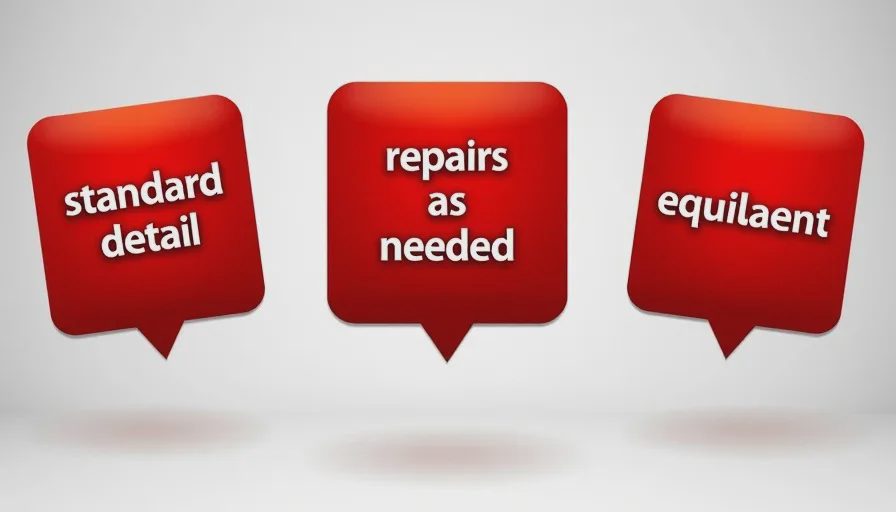
"Standard detail" | No detail is specified – you'll get whatever the crew does that day. | Ask for a written detail drawing. |
"Industry standard" | Vague – often means "cheapest acceptable." | Specify a specific manufacturer's standard or a recognized guideline (e.g., NRCA). |
"To be determined" | An opportunity for a change order later. | Insist on a fixed allowance or clear definition. |
"Repairs as needed" | Open‑ended cost exposure. | Define a budget cap and approval process. |
"Equivalent" materials | The contractor may substitute cheaper materials without your consent. | Require manufacturer and product name; substitutions must be approved by you. |
How to Compare Scopes from Different Contractors
You can't compare three vague scopes. You can only compare three detailed scopes.
Step 1: Choose the most complete scope as your baseline.
Step 2: Send that baseline to the other contractors and ask them to quote on the exact same scope.
Step 3: Compare line‑by‑line – not just total price. If one contractor omits the cover board, add its cost to their quote. If another includes extra deck repair allowance, that's a benefit.
Step 4: Weight the proposals by total lifecycle cost – not just upfront price. A cheaper scope that uses thinner insulation or a shorter warranty will cost you more over 20 years.
Keep Reading

Quartz vs quartzite: A Practical Countertop Comparison
Quartz vs quartzite: compare durability, cost, maintenance, appearance, and inst...
Stair Treads for Commercial Roof Access: A Practical Safety Guide
Stair treads can reduce slip risk on commercial access stairs. Compare materials...

Loft House Roofing: A Practical Guide to Roof Repairs and Replacement
Loft house roof guidance for owners: spot drainage, flashing, insulation, and me...
Owner Letters
0 lettersNo letters yet — be the first to write one.