
$200 Window Attic Renovation: What That Budget Really Covers

A $200 window attic renovation sounds like a useful search for a quick, low-cost improvement. In practice, that amount usually covers a small inspection, limited materials, or a temporary repair rather than a complete renovation. If the attic window is tied to a leak, damaged flashing, wet insulation, or deteriorated roof decking, the window itself may not be the real failure point.
I approach these questions from the building-envelope side. A window, curb, skylight, vent, or roof penetration is only one part of a water-shedding assembly. The visible stain indoors can be several feet away from the entry point. Before approving a small scope, identify whether the problem is cosmetic, localized, or part of a broader roof failure.
What a $200 Window Attic Renovation Can Actually Buy
A $200 window attic renovation can sometimes pay for a basic site visit, a tube or two of compatible sealant, replacement fasteners, a small piece of flashing, or minor trim work. It might also cover a temporary weatherproofing measure after a storm. Those are legitimate uses, but they are not the same as rebuilding an attic window or correcting a failed roof-to-wall transition.
For a residential property, a contractor may spend most of that budget on travel, setup, and labor before materials are added. For a commercial building, the same amount is even less likely to produce meaningful permanent work. Access equipment, fall protection, moisture testing, documentation, and coordination with tenants can quickly exceed several hundred dollars.
The useful question is not whether someone will perform a $200 window attic renovation. It is what condition will remain after the money is spent. A bead of sealant across a wet joint can hide the symptom for a few weeks while water continues moving behind siding, membrane, insulation, or interior finishes.
Start With the Failure Path, Not the Window Trim
When I inspect a suspected attic-window leak, I start above and around the opening. Look for cracked or displaced flashing, open laps, failed sealant at corners, rusted fasteners, damaged sill pans, and staining on the underside of the roof deck. On a flat commercial roof, also check nearby seams, parapet caps, drains, pipe penetrations, and ponding water.
A $200 window attic renovation is often advertised as if the opening can be improved in isolation. Water does not follow advertising categories. It follows gravity, pressure differences, cracks, laps, and the easiest path through an assembly. Wind-driven rain can enter at an upper joint and appear at the lower edge of a window frame. Condensation can create a similar stain without an exterior breach.
Use a moisture meter where appropriate, photograph every suspect detail, and compare conditions after dry weather and rainfall. If insulation is wet, do not close the area with new trim until the source and drying plan are understood. Covering wet materials can turn a small repair into mold, wood decay, or a larger interior demolition project.
When a Small Budget Is Reasonable
A $200 window attic renovation may be reasonable when the opening is sound and the defect is clearly limited. Examples include replacing a few exposed screws with compatible fasteners, renewing a short sealant joint on dry materials, securing loose trim, or installing a small flashing patch after the surrounding assembly has been checked.
The scope should state exactly what is being repaired. “Seal attic window” is too vague. A better description identifies the affected side, the substrate, the preparation method, the product, and the expected result. For example, a contractor might document removal of failed sealant at one upper corner, drying of the joint, installation of compatible sealant, and photographs after completion.
Ask whether the price includes labor, materials, access, disposal, and a return visit. A low first invoice can become a $500 to $1,500 repair if the contractor discovers rotten wood, hidden corrosion, or wet insulation. That is not necessarily a bad outcome; it is better than buying a patch that conceals the failure.

When the Price Signals a Larger Problem
A $200 window attic renovation should not be treated as a full solution when there is active leakage, recurring staining, soft framing, peeling interior finishes, or water entering during several weather conditions. Those symptoms suggest that the opening may be connected to a larger waterproofing problem.
On commercial properties, repeated small leaks deserve special attention. A retail tenant may lose inventory or ceiling tiles. An office may face disruption from buckets, odors, and damaged finishes. A warehouse may have equipment or stored materials below the leak path. The direct repair can be modest while the business interruption costs are not.
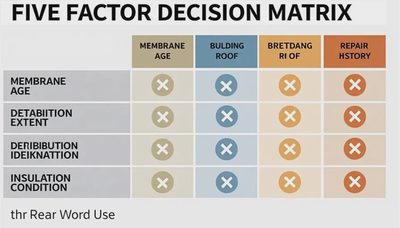
Look at the age and condition of the surrounding roof system. An older EPDM, modified bitumen, TPO, or PVC roof with widespread seam failure may not justify repeated detail patches. A roof restoration, localized membrane replacement, or broader flashing rebuild could be more economical than a string of emergency visits. The decision is never just leak or no leak; it is failure path, scope, and timing.
How to Build a Defensible Repair Scope
For a $200 window attic renovation, begin with a written condition record. Note the window size, frame material, nearby roof system, interior symptoms, last leak date, and weather conditions when the problem appeared. Take wide photographs for location and close photographs for cracks, gaps, corrosion, or displaced materials.
Next, separate temporary stabilization from permanent correction. A temporary cover or carefully selected sealant may limit immediate water entry, but it should have an expiration point and a follow-up inspection. Permanent work may require removing trim, exposing the sill, replacing deteriorated substrate, rebuilding flashing, and tying the detail into the adjacent roofing or siding system.
Request two scopes when the condition is uncertain: one for stabilization and one for a durable repair. Compare preparation, materials, access, warranty language, and exclusions rather than comparing only the bottom-line price. A contractor who explains why a window repair is not enough is often providing more useful information than one who promises a complete fix without opening the detail.
The Owner’s Practical Decision
A $200 window attic renovation can make sense for a clean, isolated defect with dry surrounding materials and a clearly defined repair. It is not a realistic budget for structural replacement, widespread water damage, roof replacement, or a full attic conversion. If someone presents it as a complete renovation price, ask what has been excluded.
For building owners and facility managers, the best next step is a focused envelope inspection that follows water from the roof surface to the interior symptom. Document the condition, stabilize active leakage, and then choose repair, restoration, or replacement based on evidence. A patch is not a plan when the surrounding assembly is failing. The roof does not care about the sales pitch; it responds to drainage, continuity, sound materials, and properly executed details.
Keep Reading

Home Additions: How to Protect the Existing Commercial Roof
Home additions can create new roof leak paths. Learn how to plan tie-ins, draina...
Commercial Roof Repair vs Replacement: A Practical Decision Framework

Can a Roof Coating Extend Life – or Are You Coating Over a Deeper Problem?
Owner Letters
0 lettersNo letters yet — be the first to write one.