
When Sectional Roof Replacement Makes More Sense Than a Full Tear-Off
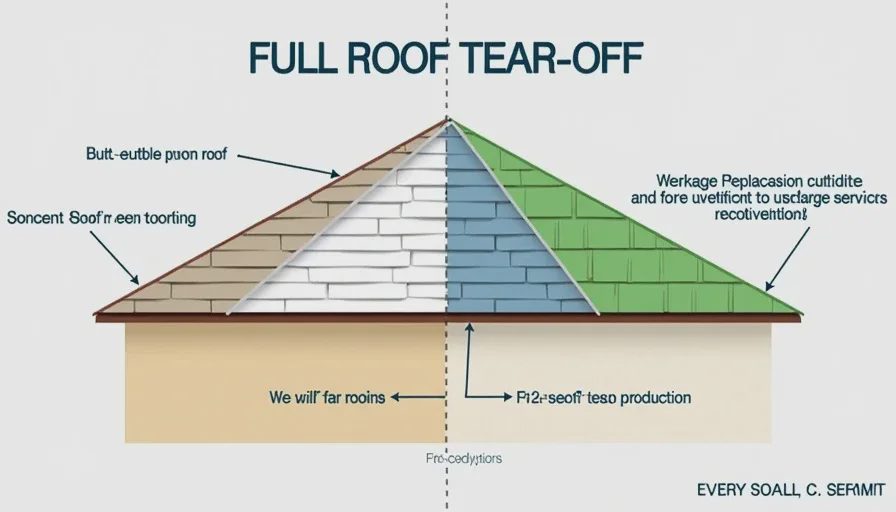
You've got a roof leak. A contractor walks the roof, comes back down, and delivers the verdict: "You need a full tear-off. $150,000."
Your stomach drops. But is that really the only option?
Here's a question most contractors won't ask themselves – because it's not in their financial interest to ask it: Does the entire roof need to go, or just the failing part?
Sectional roof replacement – removing and replacing only a defined portion of the roof while leaving the rest intact – is one of the most underutilized strategies in commercial roofing. When applied correctly, it can save you 40–60% of the cost of a full tear-off and give you 10–15 more years of service life.
But when applied incorrectly, it creates new weak points, mismatched warranties, and future headaches.
Here's how to know if sectional replacement is your smartest play – and when you should absolutely reject it.
What Sectional Replacement Actually Is (and Isn't)
It is: Removing the membrane, insulation, and flashings from a specific, physically isolated section of the roof (e.g., one wing of a building, one side of an expansion joint, or one low‑spot zone) and replacing that section with a new, fully functional roof system. The new section is tied into the old roof at a transition line – usually at a structural change like a parapet wall or an expansion joint.
It is NOT: A series of patch repairs. Sectional replacement is a complete, engineered re‑roof of a defined area – with new insulation, new cover board, new membrane, and new edge details – not just a bigger patch.
4 Scenarios Where Sectional Replacement Is the Smart Move
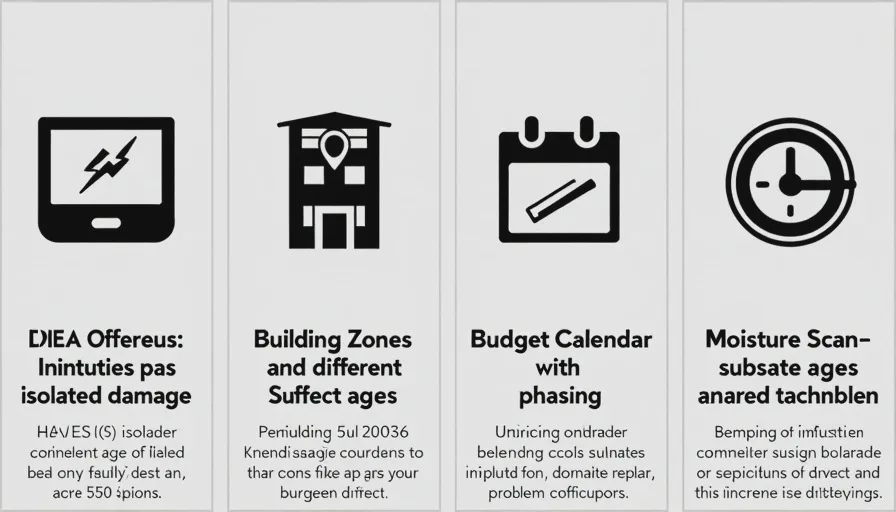
Scenario 1: The Damage Is Physically Isolated
The situation: Your roof is 12 years old and generally in good condition. But one zone – perhaps under a faulty HVAC unit, near a drain that was blocked for years, or in an area with severe ponding – has deteriorated rapidly.
Why sectional works: The rest of the roof still has 10+ years of service life. A full replacement would be waste. By replacing only the 15–20% of the roof that's failing, you effectively restart the clock on the problem area at a fraction of the cost.
Key condition: The isolation must be clean. If the damaged zone is in the middle of a large, open field with no structural breaks, sectional replacement becomes challenging – the transition detail (where new meets old) becomes a permanent seam that requires careful engineering. But if the damaged zone is separated by a parapet wall, expansion joint, or building step‑back, it's an ideal candidate.
Scenario 2: The Building Has Multiple Roof Zones with Different Ages
The situation: Your building was constructed in phases. Roof Zone A is 8 years old; Roof Zone B is 18 years old. Zone B is failing; Zone A is fine.
Why sectional works: Treating different zones as separate roofs is logical. The 18‑year‑old roof has reached the end of its life; the 8‑year‑old roof hasn't. Replacing Zone B while preserving Zone A respects the actual service life of each system.
Key condition: The zones must be physically separated – by expansion joints, fire walls, or distinct structural bays. If they're not, a single continuous roof membrane across both zones makes sectional replacement much harder because the transition line requires a watertight, movement‑tolerant tie‑in.
Scenario 3: Budget Constraints and Phasing Strategy
The situation: You need a new roof, but your capital budget doesn't stretch to a full $150,000 replacement this year. You can spend $70,000 to replace the worst section now, and phase the remaining sections over the next 2–3 fiscal years.
Why sectional works: It allows you to stop the damage at the most critical points, reduce emergency repair costs, and buy time to save for the rest. This is particularly common in school districts, municipal buildings, and non‑profit facilities with fixed annual budgets.
Key condition: You need a phasing plan – a written master plan that maps out when each section will be replaced, what system will be used, and how the transition points will be waterproofed during the interim. If you don't have a plan, you'll end up with a patchwork of mismatched materials and no coherent strategy.
Scenario 4: The Existing Roof Is Functionally Sound but Has a Substrate Problem in One Area
The situation: The membrane is actually in decent shape – but in one specific zone, the insulation is wet (perhaps from a previous leak that was repaired at the surface but never dried out). That wet insulation is now causing energy loss and fasteners are rusting.
Why sectional works: Instead of removing the entire roof to address a localized insulation problem, you remove only the affected section, replace the wet insulation and membrane, and leave the rest of the sound roof untouched.
Key condition: You must have a moisture survey (thermal imaging or nuclear gauge) that clearly defines the wet zone. Without it, you're guessing. If you guess wrong and leave wet insulation behind, you'll have the same problem in a few years.
The Risks – Why Contractors Hesitate to Recommend Sectional
There's a reason many contractors push for full tear‑off on every project. It's not always greed. Sectional replacement comes with genuine risks:
Risk 1: The Transition Line – The New Seam Problem
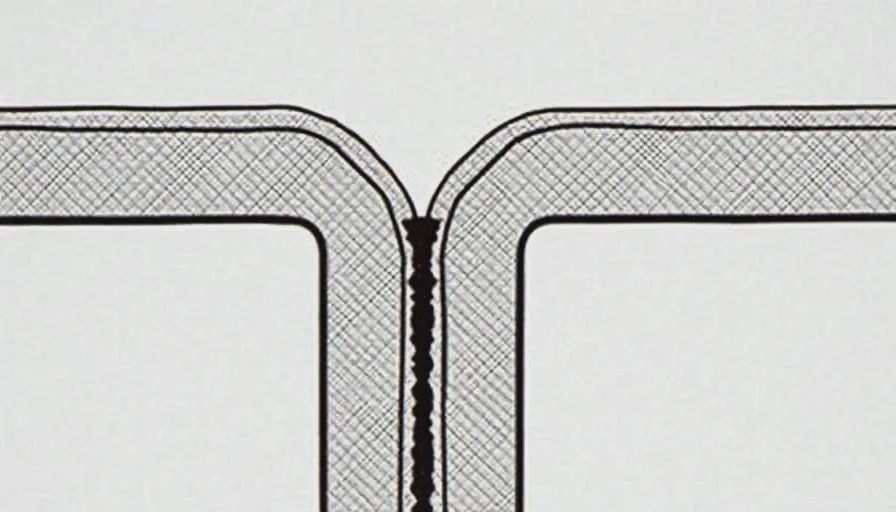
Any time you transition from a new roof to an old roof, you create a linear seam. That seam is a potential leak path. It requires careful detailing: overlapping the new membrane over the old (or vice versa), using specialized transition strips, and ensuring both surfaces are clean and compatible.
Mitigation: Use a factory‑made transition strip or a two‑part flashing system. Require the contractor to flood‑test or conduct a water spray test on the transition line before final acceptance.
Risk 2: Color and Material Mismatch
If the original membrane is 12‑year‑old TPO from a manufacturer that has changed its formulation, the new TPO may not weld to the old TPO. Even if it does, the color may differ noticeably (sun‑bleached old vs. bright new), which is aesthetic but can bother tenants or owners.
Mitigation: Choose a membrane that is physically and chemically compatible – or design the transition detail to use a mechanically fastened termination bar that doesn't rely on heat‑welding old to new. Consider using a darker or neutral transition flashing that visually masks the difference.
Risk 3: Warranty Complications
Manufacturers typically offer full‑system warranties only when the entire roof is replaced with their materials. Sectional replacement often results in two separate warranties – one for the new section, and the original warranty (if still active) for the old section, or no warranty on the old section at all.
Mitigation: Accept this as the trade‑off for cost savings. Focus on ensuring the new section has a strong manufacturer warranty and a good contractor labor warranty. The old section's warranty is already expired or degraded, so you're not losing much.
Risk 4: Future Inevitability
A sectional replacement doesn't stop the aging of the rest of the roof. In 5–8 years, you'll be looking at another section replacement – or a full tear‑off anyway. Sectional replacement is delaying and spreading the cost, not avoiding it.
Mitigation: Be honest with yourself about your ownership horizon. If you plan to sell in 5 years, sectional is perfect – you solve the immediate problem and avoid the full cost. If you plan to hold for 20 more years, a full tear‑off now may be cheaper in the long run (avoiding two labor mobilizations and price inflation).
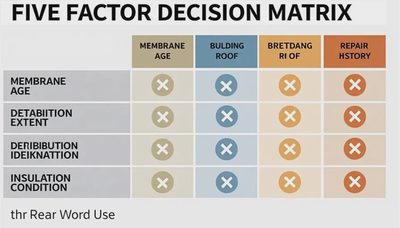
The Decision Matrix – Is Sectional Right for You
Factor | Favoring Sectional | Favoring Full Tear‑Off |
|---|---|---|
Damage extent | < 30% of roof area failing | > 50% of roof area failing |
Roof age (overall) | < 15 years (plenty of life left) | > 20 years (near end of service life) |
Physical separation | Zones separated by walls/expansion joints | Single, continuous roof deck with no breaks |
Budget | Limited – need to phase spending | Sufficient capital for full project |
Ownership horizon | 5–10 years (sell before full replacement needed) | 15+ years (will own through full life cycle) |
Tenant disruption | Can replace section without closing the whole building | Full replacement would require significant logistics |
A Real‑World Example
Project: 40,000‑sq‑ft suburban office building with a 14‑year‑old TPO roof. One wing (12,000 sq ft) had severe ponding and seam failures due to a drainage design flaw. The other 28,000 sq ft was weathered but dry, with no leaks.
Option A (Full Tear‑Off): $160,000 – all at once.
Option B (Sectional Replacement): Replace only the 12,000‑sq‑ft wing. New tapered insulation to fix the slope, new 60‑mil TPO membrane, new edge metal. Tie‑in at the expansion joint between wings. Cost: $65,000.
Result: The owner saved $95,000, fixed the drainage problem permanently, and has a solid plan to replace the other wing in 6–7 years when its life naturally ends. Tenant operations continued with minimal disruption, and the new section carries a 20‑year warranty.
Keep Reading

Home Additions: How to Protect the Existing Commercial Roof
Home additions can create new roof leak paths. Learn how to plan tie-ins, draina...

$200 Window Attic Renovation: What That Budget Really Covers
$200 window attic renovation is rarely a complete fix. Learn what that budget ca...
Commercial Roof Repair vs Replacement: A Practical Decision Framework
Owner Letters
0 lettersNo letters yet — be the first to write one.