
7 Signs a Commercial Flat Roof Leak Is Bigger Than the Ceiling Stain
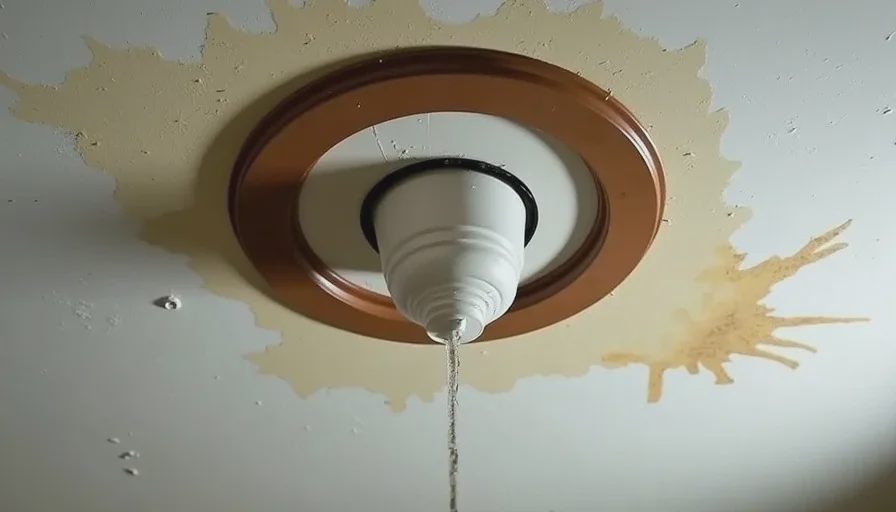
You walk into your building on a Monday morning. There it is – a brown, water-stained ring on the ceiling tile. Maybe it’s the size of a dinner plate. Maybe it’s smaller. You grab a bucket, call a handyman, and figure you’ll patch the roof from the inside and move on.
That’s a mistake.
A ceiling stain is like the tip of an iceberg. The water that made it visible traveled through insulation, across vapor barriers, along structural members, and probably picked up dirt, rust, and microbial growth on its way down. By the time you see it, the real problem is often five times larger – and five times more expensive – than you think.
Here are 7 signs that your commercial flat roof leak is not a simple fix, and why ignoring them can turn a $2,000 repair into a $50,000 replacement.
Sign 1: The Stain Grows Faster Than You Expect
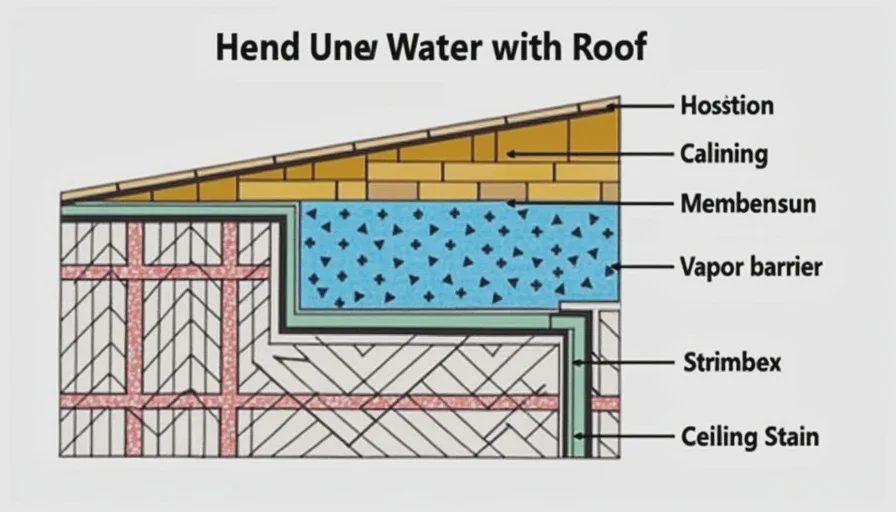
A small stain that takes weeks to spread is one thing. But if you check it after a single rain event and it’s doubled in size – or if it reappears in the same spot within days after you’ve “fixed” it – that’s not a pinhole leak.
What’s really happening: Water is pooling above your ceiling, trapped by saturated insulation or a failed vapor barrier. The visible stain is just the overflow. The real reservoir of moisture is sitting directly on top of your deck, quietly corroding fasteners and rotting wood (if you have a wood deck).
Owner’s takeaway:
If the stain expands noticeably after every moderate rain, stop patching from inside. Get up on the roof or hire someone who will – and trace the water path from the top down.
Sign 2: You Hear Dripping After the Rain Has Stopped
Dripping that continues for more than 12–24 hours after a storm ends is a dead giveaway that water is being stored somewhere above your ceiling.
What’s really happening: Saturated insulation – often polyiso or perlite – acts like a sponge. It holds water and releases it slowly. That means your roof system has lost its thermal performance and is adding weight to your structure. A fully saturated 10,000-square-foot roof can hold thousands of extra pounds, which stresses joists and purlins.
Owner’s takeaway:
Extended dripping means you’re beyond a surface-level repair. You need to identify the wet insulation boundary and remove it. That’s a scope that typically involves a contractor with a moisture scan, not a caulking gun.
Sign 3: The Water Is Warm – Or Has an Odor
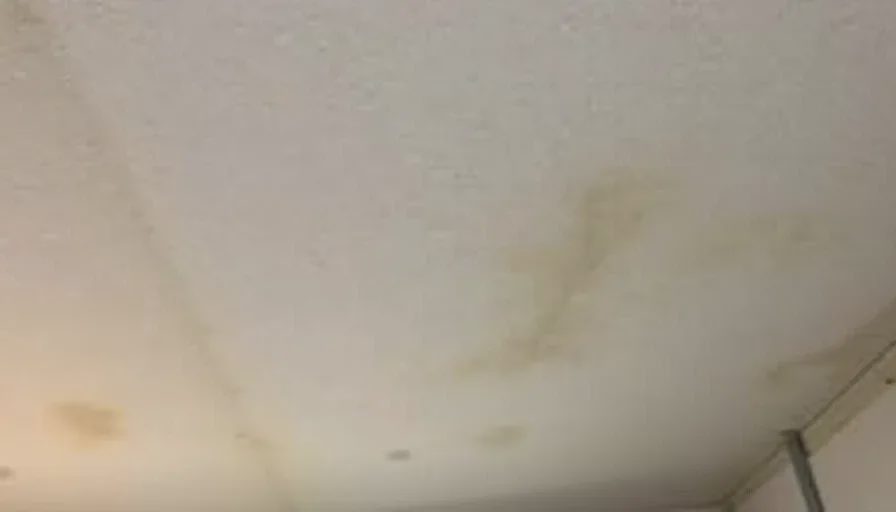
This one surprises a lot of owners. If you touch the dripping water and it feels noticeably warmer than room temperature, or if it carries a musty, sour, or even sweet smell, you’re looking at biological activity inside the roof assembly.
What’s really happening: Standing water in insulation creates a perfect environment for mold, fungi, and bacteria. As they grow, they generate heat (hence the warm water) and release volatile organic compounds (hence the odor). Over time, they can also accelerate corrosion on metal decks and degrade adhesives.
Owner’s takeaway:
Odor and warmth are red flags that your roof is not just leaking – it’s biologically active. That means the affected insulation cannot be dried out effectively; it must be cut out and replaced. And if you have a metal deck, you’ll need to check for rust pitting before re-covering.
Sign 4: The Ceiling Tile Is Sagging – Not Just Stained
A flat ceiling tile with a brown circle is one thing. A tile that bows downward, showing a visible curve or even a small bubble, is another level entirely.
What’s really happening: The water weight has saturated the tile beyond its capacity. But more importantly, the water above that tile is heavy enough to deform the suspended ceiling grid. That implies a significant volume of water – often gallons – is sitting just inches above your head.
Owner’s takeaway:
Sagging means imminent collapse of that tile, and possibly neighboring tiles. Don’t poke it to “drain” it – that releases contaminated water and can cause secondary damage to electronics, inventory, or office furniture. Instead, place a large plastic sheet below it and call a roofing professional for an immediate top-side inspection.
Sign #5: Leaks Appear at Multiple, Unconnected Locations
You have a stain near the HVAC curb on the east side, another stain near a drain on the west side, and a third near a parapet wall. They all showed up after the same storm, but they don’t seem connected.
What’s really happening: This is the classic signature of a widespread membrane failure – often due to age-related embrittlement, UV degradation, or severe ponding that has overwhelmed the entire low-slope area. When multiple leaks appear across different roof zones, it’s rarely coincidental. It usually means the membrane’s tensile strength has dropped below the point where it can handle normal thermal expansion and contraction.
Owner’s takeaway:
Multiple leaks are a strong indicator that you’re looking at system-wide deterioration, not isolated flashings or pipe penetrations. At this stage, the cost of chasing individual leaks often exceeds the cost of a strategic recover or replacement. Start thinking about a comprehensive repair-vs-replace analysis.
Sign 6: You Find Water Stains on Lower Floors – but Not the Floor Directly Below the Roof

This is the one that really trips up facility managers. You see water damage on the second floor of a three-story building, but the ceiling directly under the roof (the top floor) looks perfectly fine.
What’s really happening: Water has found a hidden pathway – usually down a plumbing chase, an electrical conduit, or inside a hollow masonry wall. It bypasses the top-floor ceiling entirely and emerges where gravity and building geometry take it. This is common on buildings with complex mechanical penetrations or rooftop units with unsealed curb bases.
Owner’s takeaway:
If the visible water damage doesn’t align vertically with the roof directly above, don’t assume it’s a plumbing issue. Conduct a systematic roof-to-ground water trace. Start by checking all rooftop penetrations, curbs, and parapet caps – even if they look dry on the surface.
Sign 7: Your Energy Bills Have Crept Up – Even Before You Saw the Stain
This is the silent signal. You’ve noticed your HVAC system running longer, or your heating/cooling costs are 10–15% higher than last year for the same occupancy and weather. Then, weeks later, a ceiling stain appears.
What’s really happening: Wet insulation loses its R-value – dramatically. Water conducts heat about 20 times faster than still air, so saturated roof insulation is essentially a thermal bridge. Your roof is no longer insulating; it’s conducting heat and cold directly into your building. The stain is just the visual confirmation of a problem that has been costing you money for months.
Owner’s takeaway:
If you have unexplained energy creep and then spot a stain, the two are almost certainly connected. Factor the energy waste into your repair-or-replace math – a roof that’s losing insulation performance can pay for part of its own replacement through energy savings over 5–10 years.
What to Do When You Spot Any of These Signs
Ceiling stains are not emergencies – but they are early warning systems. The key is to act methodically, not panically:
Document everything – take photos of the stain, note the date and weather conditions, and record any energy bills or maintenance logs.
Perform a top-side visual inspection – if safe, walk the roof (or use a drone) to look for ponding, splits, blisters, and failed seams around penetrations.
Get a professional moisture survey – a certified thermographer or nuclear moisture gauge operator can map the extent of wet insulation without destructive testing.
Compare options – don’t accept the first contractor’s “tear-off” recommendation without getting at least two other scopes and opinions.
Keep Reading

Drain Cleanout Problems on Commercial Flat Roofs: What Owners Should Know
Drain cleanout guidance for commercial flat roofs: learn what blockages mean, wh...

Ponding Water After Rain: When to Monitor and When to Escalate
Why Flat Roof Leaks Around HVAC Curbs and Penetrations Keep Returning
Owner Letters
0 lettersNo letters yet — be the first to write one.