
Drain Cleanout Problems on Commercial Flat Roofs: What Owners Should Know

A drain cleanout is a small access point with a large job on a commercial flat roof. It gives a maintenance team or plumber a way to reach the drainage line, remove obstructions, and confirm whether water has a clear path away from the roof. When that access is buried under gravel, covered by membrane repairs, or ignored for years, a manageable drainage issue can become ponding, membrane damage, wet insulation, and an interior leak.
The roof does not care about the sales pitch. It responds to standing water, blocked outlets, failed seals, and slow maintenance. For a building owner, the practical question is not simply whether a drain cleanout exists. The question is whether the entire drainage path works when a hard storm arrives.
What a drain cleanout does on a flat roof
Commercial roof drainage usually includes primary roof drains, strainers, leaders, interior piping, overflow drains, scuppers, and connected underground lines. A drain cleanout provides access to a section of that system so debris and buildup can be removed without immediately opening large areas of roof or excavating the entire line. Depending on the building, the access point may be near a drain bowl, at a pipe transition, or along a buried line outside the roof edge.
A drain cleanout is not the same as a roof drain strainer. The strainer catches leaves, packaging, gravel, and other debris at the surface. The cleanout gives service personnel a place to inspect or clear the pipe farther downstream. Confusing the two leads to incomplete maintenance. A clean-looking strainer does not prove that the horizontal drain line is open.
Access also matters during investigation. If water remains around one drain after nearby areas have dried, a technician can use the cleanout to determine whether the restriction is local or farther into the system. That evidence helps an owner buy the right scope instead of approving repeated surface patches.
Warning signs that the drainage path is failing
The clearest warning sign is ponding that remains after the rest of the roof has dried. A shallow puddle several feet across can add substantial load and repeatedly expose the membrane to ultraviolet light, freeze-thaw movement, and biological growth. Water near a parapet, rooftop unit, or seam deserves attention even when no ceiling stain has appeared inside.
Other clues include slow drainage during rainfall, water bubbling from a cleanout cap, debris collecting in a low area, rust around metal fittings, cracked sealant, and recurring leaks that appear in the same room after every storm. An overflow opening that stays dry during heavy rain can also indicate that the primary route is restricted, although the opening itself should be inspected before drawing a conclusion.
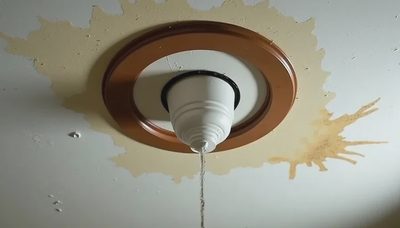
Interior symptoms are often delayed. Wet insulation may spread laterally beneath TPO, PVC, EPDM, or modified bitumen before water reaches a ceiling tile. A roof moisture survey, test cuts, or targeted inspection can show whether the drainage problem has already affected the assembly. Do not assume a new ceiling stain identifies the original entry point.
How a professional inspection should proceed
A useful inspection starts with photographs, roof plans, drain locations, and a record of recent weather. The technician should note membrane type, roof age, slope, ponding depth, flashing condition, and any previous repair areas. That baseline separates a blocked line from a broader design or slope problem.
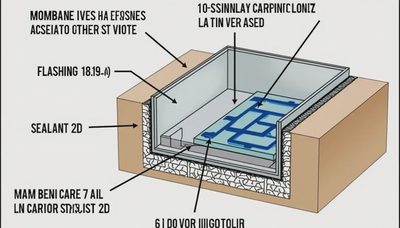
Next, the drain strainer and surrounding membrane should be checked for cracks, open seams, loose fasteners, and failed flashing. The drain bowl must remain securely integrated with the waterproofing system. Clearing the pipe while leaving a separated drain flange or damaged clamping ring in place solves only half the problem.
The drain cleanout should then be opened carefully and inspected for sediment, roots, collapsed pipe, construction debris, or standing water. Depending on the obstruction, service may involve a hand auger, sewer camera, water jetting, or vacuum equipment. Camera findings are particularly useful when a property manager needs to distinguish a serviceable blockage from a broken underground section.
A responsible report identifies the failure path, not just the symptom. It should say whether the line is open, partially restricted, structurally damaged, or connected to a capacity problem. That distinction affects budget, scheduling, and the protection of tenant operations.

Repair choices and realistic cost planning
A simple cleaning or cap replacement can be a relatively small service call, often costing a few hundred dollars to around $1,000 depending on access, equipment, and location. More involved drain cleanout work with camera inspection, jetting, or difficult roof access can reach $1,500 to $4,000. These are planning ranges, not bids, but they show why early investigation is usually cheaper than waiting for saturated insulation.
If the pipe is cracked below the roof, excavation or interior access may be required. A localized pipe repair might run several thousand dollars, while a drainage redesign can reach much more when concrete removal, new leaders, structural coordination, or roof membrane replacement is involved. The roof scope should include compatible flashing and membrane work after the plumbing repair. A pipe that is fixed but poorly sealed at the roof remains a leak risk.
Coatings and patches do not correct a blocked line. They can protect a sound membrane, but they cannot create slope or remove trapped water. A patch is not a plan when the same drain area has failed three times in two years.
How drainage problems affect repair or replacement decisions
One restricted outlet does not automatically mean the whole roof needs replacement. If the membrane is flexible, seams are sound, insulation is dry, and ponding is limited to one serviceable line, targeted drainage work and preventive maintenance may be appropriate. The decision should be based on evidence from the affected area and the rest of the roof.
Replacement becomes more compelling when several drains have recurring restrictions, insulation is wet across broad sections, the membrane is near the end of its expected service life, or the original slope sends water toward chronic low points. At that stage, replacing only the visible drain may spend money without removing the failure pattern.
During a reroof, owners can evaluate larger strainers, improved overflow protection, tapered insulation, additional drains, or revised scupper details. These changes must be coordinated with structural capacity and local code requirements. More drains are not automatically better if the piping, structure, or overflow path cannot support the design.
A practical maintenance plan for owners
Schedule roof drainage checks before the wet season and after major construction activity. Construction debris, fastener cutoffs, packaging, and dust can travel into openings even when a roof was clean the week before. Keep a dated photo log of every drain, strainer, overflow, and drain cleanout so a new contractor can compare conditions rather than rely on memory.
After major storms, inspect low areas and confirm that water is moving through primary and overflow routes. Do not let maintenance staff remove heavy debris by dragging it across the membrane. Use the correct tools and protect the roof surface around the work area.
When requesting proposals, ask for the blockage location, inspection method, pipe condition, roof repair details, and post-service verification. A useful proposal explains what the contractor found and what remains uncertain. If a drain cleanout cannot be opened because it is buried or bonded over, include restoring access as part of the scope.
Finally, track recurring leaks by room, roof zone, weather event, and repair date. Patterns often reveal that a supposed flashing leak is actually water backing up from a restricted drainage line. Spend first on finding the failure path, then select the smallest scope that will reliably control it. That is how owners protect the roof, the building interior, and the operating budget.
Keep Reading

Owner Letters
0 lettersNo letters yet — be the first to write one.