
Wet Insulation Warning Signs Owners Miss Until Energy Bills Rise
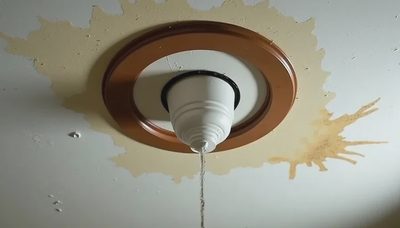
The roof isn't leaking. Not visibly, anyway. No ceiling stains, no drips, no buckets on the floor.
But your energy bills have crept up 12% this year. Your HVAC system runs longer. Some rooms are warmer in summer, colder in winter. And you can't figure out why.
Here's the answer you're probably missing: Your roof insulation is wet – and it's been wet for months, maybe years.
Wet insulation is the silent killer of commercial roofs. It doesn't announce itself with dramatic ceiling stains. Instead, it whispers – through rising utility costs, reduced comfort, and gradual deterioration that most owners chalk up to "old age."
By the time a ceiling stain appears, the wet insulation problem has often been cooking for a long time. Here's how to spot the warning signs early – and why your energy bill is often the loudest alarm you're ignoring.
The Physics Behind Wet Insulation
Let's start with the numbers:
Dry polyiso insulation has an R‑value of approximately 6 per inch.
Wet polyiso can lose 50–80% of its R‑value, depending on saturation level.
Water conducts heat about 20 times faster than still air.
What does this mean for your building? A roof with 20% wet insulation is essentially operating with a thermal hole. In winter, heat escapes upward through the wet areas, forcing your heating system to work harder. In summer, solar heat penetrates more easily, overloading your AC.
The result: You're paying to heat and cool the outdoors through your wet roof.
6 Warning Signs Owners Miss (Until It's Too Late)
Sign 1: Unexplained Energy Creep – The #1 Clue
Your energy bills have gone up 8–15% year over year, despite no changes in occupancy, equipment, or thermostat settings. You've checked HVAC maintenance, seal leaks, and window efficiency – but the bills keep rising.
Why you miss it: Energy creep is gradual. A 2–3% increase per quarter doesn't feel alarming. But over two years, that's 10–15% – and it's money you're burning through wet insulation.
What to do: Pull your last 24 months of utility bills. Normalize for weather (heating/cooling degree days). If there's a trend upward that doesn't track with weather, suspect wet insulation. Call for a moisture survey.
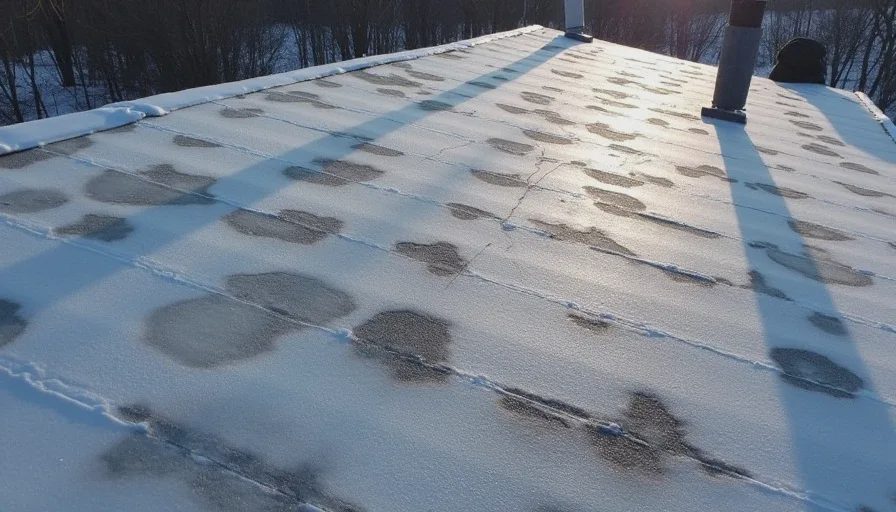
Sign 2: "Hot Spots" on the Roof Surface in Winter (or "Cold Spots" in Summer)
If you walk your roof (safely) on a cold winter morning after a light frost, you may see areas where frost melts faster – or where snow melts in patches. Those are thermal bridges created by wet insulation conducting heat upward. In summer, those same areas will feel noticeably warmer to the touch than dry sections.
Why you miss it: Most owners don't walk their roofs after a frost. And if they do, they interpret the melting as "the sun hit that spot" – not as a diagnostic signal.
What to do: After a frost or light snowfall, take photos from above (drone or adjacent building). Areas of rapid melt are wet insulation. Alternatively, use an infrared camera – wet spots appear as warmer (winter) or cooler (summer) anomalies.
Sign 3: The Roof Surface Feels "Squishy" or Has Unusual Blisters
When insulation underneath is wet and deteriorating, the roof membrane may start to bulge, blister, or feel spongy underfoot. This is especially common on modified bitumen and single‑ply roofs where moisture vapor creates pressure from below.
Why you miss it: You may not walk the roof often. Or if you do, you may attribute the soft spots to normal aging – when they're actually indicators of insulation failure.
What to do: Mark all soft or blistered areas on a roof plan. A moisture meter or core sample can confirm if the cause is wet insulation or something else. If more than a few spots are soft, suspect widespread saturation.
Sign 4: Algae, Moss, or Fungal Growth on the Membrane – Especially in Ponding Areas
Stagnant water promotes biological growth. Algae and moss don't just look bad – they indicate that moisture has been sitting on the membrane long enough to support life. If that moisture has found its way through even microscopic cracks, it's also feeding the insulation below.
Why you miss it: Algae is often dismissed as cosmetic. Or it's cleaned off without anyone asking why it grew there in the first place.
What to do: If you see algae growth, particularly in low spots or around drains, that's a sign of chronic ponding – and chronic ponding is a prime cause of wet insulation. Treat the symptom by cleaning, but investigate the root cause with a moisture survey.
Sign 5: Interior Odors – Musty, Damp, or "Sweet" Smell
Wet insulation, especially in contact with organic debris or backed‑up drains, can develop a distinct musty odor. Some types of mold and fungi produce a slightly sweet or earthy smell that is noticeable near the ceiling or in HVAC returns.
Why you miss it: Odors are often blamed on carpets, cleaning supplies, or "old building smell." Most people don't connect ceiling odor with roof insulation.
What to do: If you have a persistent musty smell that doesn't clear with better ventilation, especially after rain, have your roof insulation checked. The odor is the result of biological activity – which means moisture has been present for weeks or months.
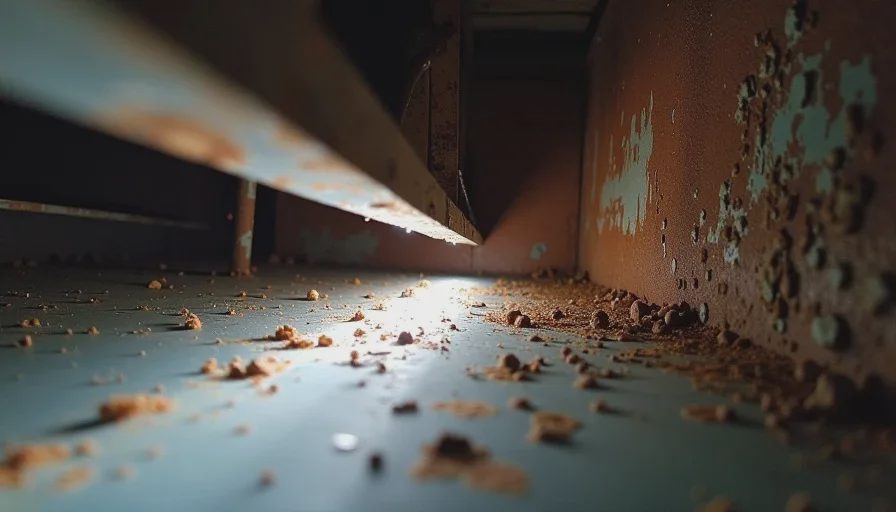
Sign 6: Rust Stains or Corrosion on Fasteners (Visible from Below)
If you have a metal deck with exposed fasteners (or access to the underside of the roof via a ceiling plenum), check for rust stains, white efflorescence, or corrosion around fasteners. Water that has migrated through saturated insulation often carries minerals and causes visible discoloration on the underside.
Why you miss it: Most owners never look at the underside of the roof deck. It's hidden above ceiling tiles or in a mechanical plenum.
What to do: Take a flashlight and inspect the underside of the deck (from inside the building) at regular intervals. If you see rust streaks, mineral deposits, or black staining around fastener heads, you likely have wet insulation above.
How to Confirm Wet Insulation – The Diagnostic Toolkit
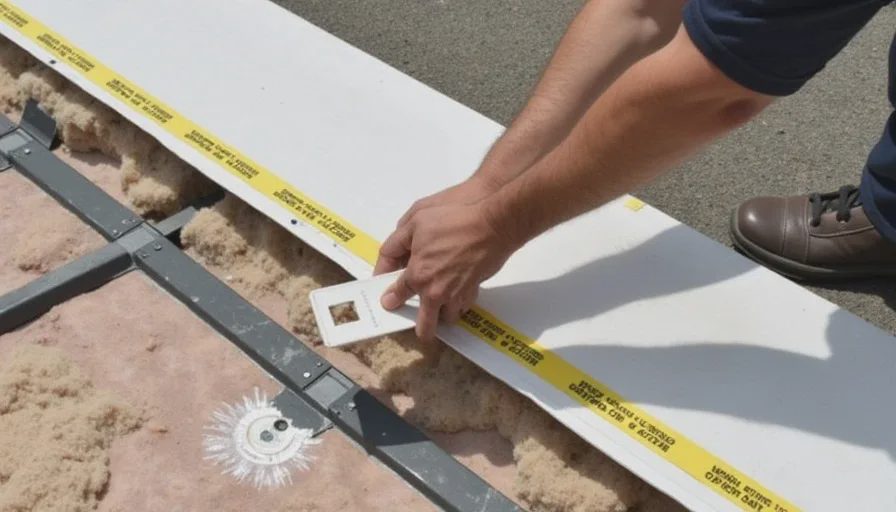
Suspicion is not confirmation. Here's how to know for sure:
1. Infrared Thermography
What it is: A camera that detects surface temperature differences. Wet insulation conducts heat differently than dry insulation, creating a detectable temperature anomaly.
Pros: Non‑destructive, fast, covers large areas quickly.
Cons: Requires proper conditions (sun, wind, moisture differential); less accurate in very dry or very wet conditions.
2. Nuclear Moisture Gauge
What it is: A handheld device that emits low‑level radiation and measures hydrogen content (water). It provides a moisture reading per square foot.
Pros: Highly accurate, works in any weather, quantifies moisture percentage.
Cons: Requires licensing and training; slower than infrared.
3. Core Samples (Destructive)
What it is: Cutting a small circle (1–2 inches) through the membrane and insulation to physically inspect and weigh the insulation sample. Weight is compared to a dry standard.
Pros: Definitive – you actually see and touch the insulation.
Cons: Destructive (requires patching), limited to specific locations, doesn't map whole roof.
4. Electronic Moisture Meters (Capacitance or Impedance)
What it is: A handheld meter that measures moisture content through the membrane surface (up to 1‑2 inches deep) using electrical resistance or capacitance.
Pros: Non‑destructive, quick, good for spot‑checking.
Cons: Limited depth; affected by surface moisture or metal components.
The Cost of Ignoring Wet Insulation – A Real‑World Example
Case: A 30,000‑sq‑ft retail building with a 12‑year‑old built‑up roof. The owner noticed energy bills creeping up 3–5% per year but attributed it to rising utility rates. He didn't inspect the roof because there were no visible leaks.
Year 3: Energy costs had increased 14% cumulatively – $6,000/year in extra utility costs.
Year 5: A ceiling stain appeared. Upon inspection, 35% of the insulation was saturated. The deck had rust pitting in three areas. The membrane was still intact but had lost adhesion due to trapped moisture vapor.
Repair cost: $42,000 (insulation replacement in wet zones, membrane patch, deck repair). The energy savings after repair: $5,200/year. Payback on the repair: about 8 years.
If he had caught it at Year 3 (wet insulation, no deck rust, no membrane damage): Repair cost would have been $18,000. Payback: 3.5 years. And he would have saved $15,600 in energy waste over those two years.
Ignorance cost him: $24,000 in extra energy waste + $24,000 in more expensive repairs = $48,000 avoidable cost.
What to Do If You Suspect Wet Insulation
Step 1: Don't Panic – But Don't Delay
Wet insulation doesn't fail catastrophically overnight. But it does degrade every month it stays wet. The clock is ticking.
Step 2: Get a Moisture Survey – Immediately
Hire a qualified professional to perform infrared or nuclear moisture survey. The report should include:
A map of wet areas with percentage of coverage
Core sample verification in at least 3–5 suspect locations
Deck condition assessment (rust, rot, or efflorescence)
Step 3: Determine the Extent
< 15% wet: You can cut out and replace the wet insulation, patch the membrane, and move on. Cost: moderate.
15–30% wet: You're in the gray zone – sectional replacement or a recover (with full insulation replacement in affected zones) may be the best approach.
> 30% wet: You're looking at full tear‑off. The cost of chasing wet spots exceeds the cost of starting fresh.
Step 4: Fix the Source
Wet insulation is almost always caused by a leak – either an active one or a past leak that was never properly dried out. Before you replace the insulation, ensure the source (flashing, seam, penetration) is permanently repaired.
Step 5: Consider the Long‑Term Solution
If your roof is approaching the end of its service life, don't just patch the wet insulation – use the opportunity to plan a strategic replacement. A patch extends life by 2–3 years; a replacement resets the clock for 20.
Get a Moisture Survey and Comprehensive Quote
The cost of a moisture survey is typically $500–$2,000 – a fraction of the cost of replacing wet insulation or dealing with energy waste. It's one of the best investments you can make in your roof.
SelectHomeQuote connects you with pre‑screened commercial roofing professionals who specialize in moisture detection and insulation replacement. They'll:
Perform a full moisture survey (infrared and/or nuclear)
Provide a detailed report with wet‑area mapping and repair recommendations
Give you itemized quotes for insulation replacement, membrane repair, or full replacement – depending on the extent of wetness
Help you decide whether to patch, replace, or recover
Don't wait for the ceiling stain. Your energy bill is already telling you the story.
Keep Reading

Drain Cleanout Problems on Commercial Flat Roofs: What Owners Should Know
Drain cleanout guidance for commercial flat roofs: learn what blockages mean, wh...
7 Signs a Commercial Flat Roof Leak Is Bigger Than the Ceiling Stain
Ponding Water After Rain: When to Monitor and When to Escalate
Owner Letters
0 lettersNo letters yet — be the first to write one.